

● The exhibition revives the legacy of this document and encourages reflection on human rights.
● The presentation was given by journalist Zenaido Hernández and the exhibition's curator, Francisco Cedrés.
The International Campus of La Laguna opens the exhibition 'Universal Declaration of Human Rights for Future Generations. La Laguna Declaration of 1994' at the Casa Anchieta, an exhibition that highlights the relevance of this historic commitment to human dignity, coexistence and responsibility towards future generations and which will be available until July 30.
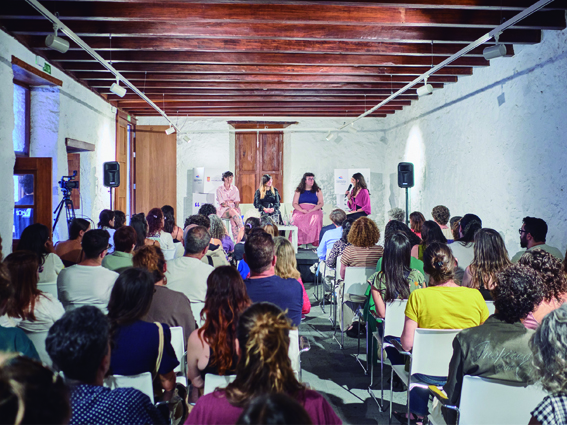
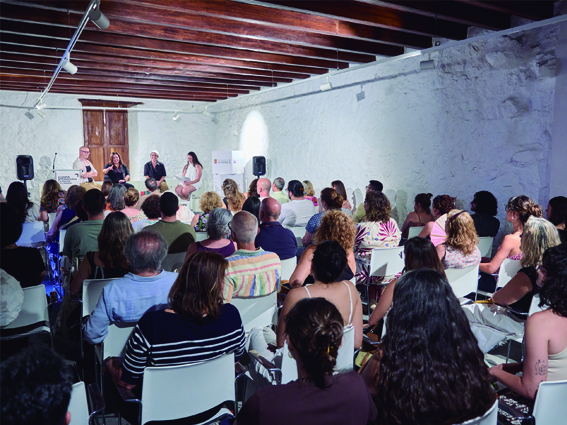
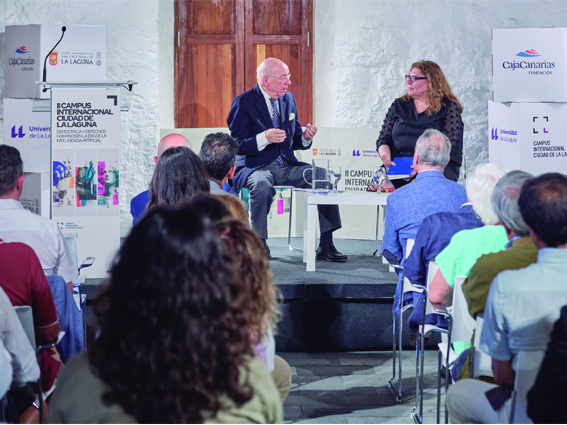
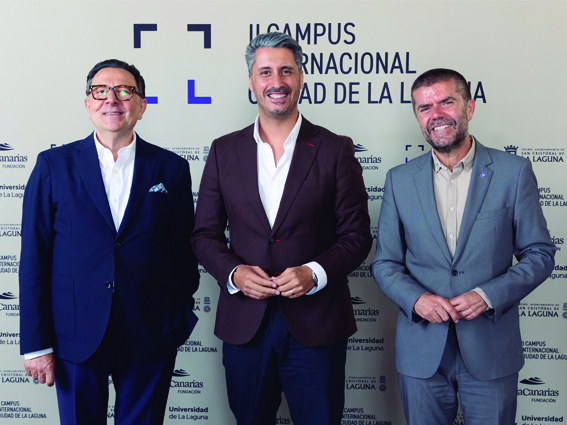
The presentation, led by journalist Zenaido Hernández and including a guided tour by the exhibition's curator, Francisco Cedrés, was attended by the Councilor for Culture and President of the Autonomous Organization of Musical Activities of La Laguna, Adrián del Castillo; the Rector of the University of La Laguna, Francisco García; and the Secretary of the Board of Trustees of the CajaCanarias Foundation, Belén Melián Batista.
The exhibition brings together documents, images, and historical contextualization materials that allow visitors to explore the origin and evolution of the Declaration, as well as its relevance today. The exhibition aims to encourage the public to reflect on the role of education, international cooperation, and social participation in the defense of human rights.
The Councillor for Culture and the Autonomous Body of Musical Activities of the La Laguna City Council, Adrián del Castillo, stressed that “talking about human rights is also talking about taking care of our environment, protecting our heritage, investing in education, culture and a fairer society, and this exhibition is a good opportunity to remember that legacy and bring it closer to those who may not know it.”.
In this regard, the Rector of the University of La Laguna, Francisco García, emphasized the importance of the La Laguna Declaration as part of “a process that began in 1972 with the publication of the Club of Rome's report, 'The Limits to Growth,' and continued in 1987 with the well-known Brundtland Report, 'Our Common Future,' promoted by the United Nations, and subsequently with the Rio Summit in 1992.” “This process entails the progressive integration of the rights of future generations as limitations on current economic development models,” he added. He also explained that “this declaration is more relevant than ever.”.
The secretary of the Board of Trustees of the CajaCanarias Foundation, Belén Melián Batista, emphasized that the organization is “especially proud to contribute to a project that, in its second edition, is establishing itself as a leading forum for dissemination, reflection, and training from multiple perspectives, both in the academic and cultural spheres.” She also noted that the exhibition provides an opportunity to “highlight a highly relevant document that invites us to reflect on our commitment to human dignity and the responsibility we share toward present and future generations.”.
The exhibition is framed within the vocation of San Cristóbal de La Laguna as a city of encounter, dialogue and cooperation between cultures, and recovers the spirit of the La Laguna Declaration of 1994, an international appeal in favor of human rights, cultural diversity and the building of a culture of peace.
At the presentation, Zenaido Hernández highlighted the humanism of professors Marisa Tejedor and Francisco Aznar, who made possible the conference that resulted in this document, bringing together in La Laguna figures such as oceanographer Jacques Cousteau, politician and high-ranking international official Federico Mayor Zaragoza, and former Portuguese president Mario Soares. He also focused on the context of 1994, a year of great upheaval, when the first boat carrying African migrants arrived in Tenerife.
The exhibition's curator led the visitors through the room and explained that the exhibition's objective was for the images to engage viewers and stimulate critical thinking. He also highlighted the original documents on display, such as the signed declaration provided by Francisco Aznar.
The exhibition 'Universal Declaration of Human Rights for Future Generations. La Laguna Declaration of 1994' will be available at Casa Anchieta until July 30th so that all attendees can approach human rights and their impact on building a fairer society committed to the future from La Laguna in a different way.