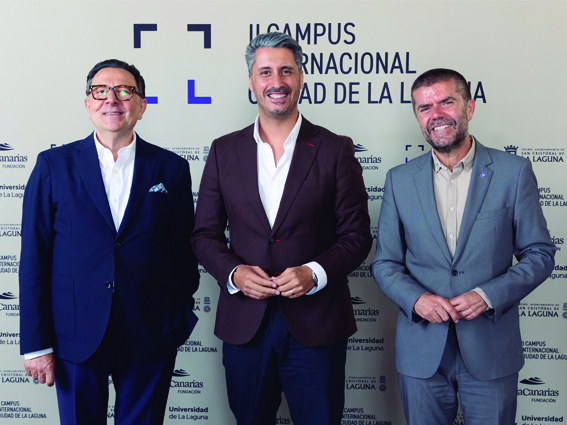


The International Campus Ciudad de La Laguna concludes its second edition with a lecture by the magistrate focused on human rights to protect democracy
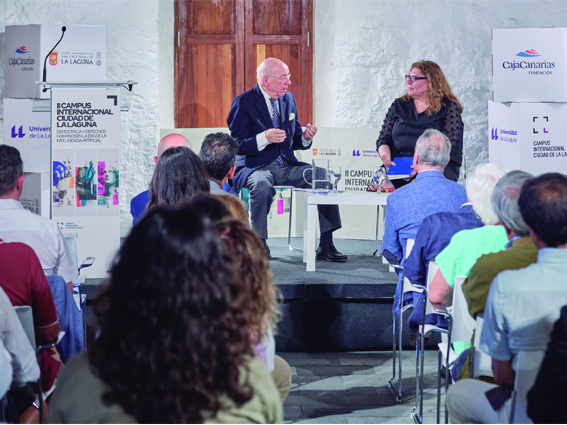
“The criminal process and its guarantees are dead; only the media version survives.” This was one of the statements with which Judge Baltasar Garzón closed the Ciudad de La Laguna International Campus this morning in his lecture, “Justice Captured: When Suspicion Condemns, the Algorithm Amplifies, and Guilt Is Negotiated.” In his presentation, he analyzed the current judicial reality and the influences of political power, the media machine, large corporations, and the digital ecosystem in creating socially acceptable sentences that are “not subject to appeal.”.
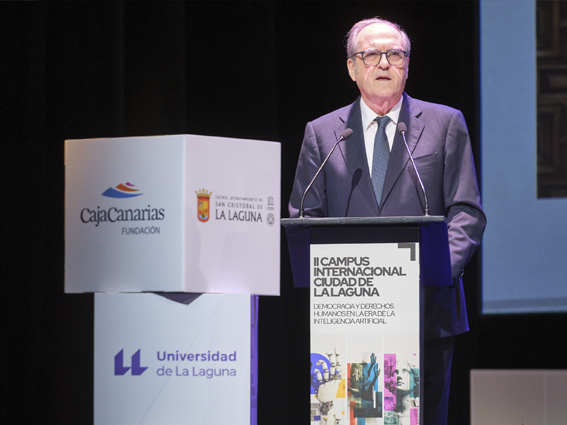
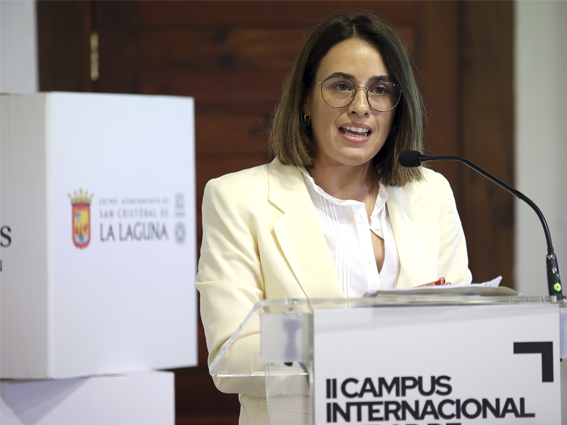
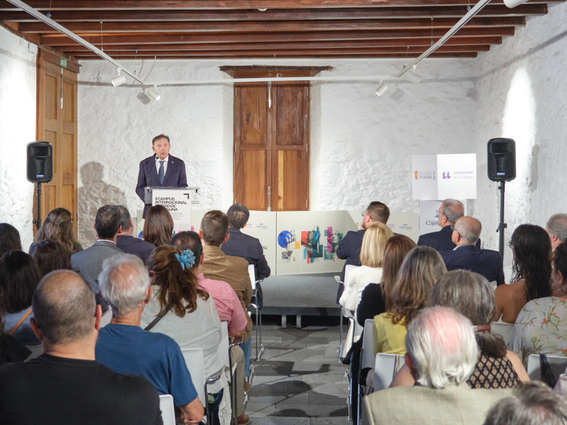
The closing ceremony was presided over by the deputy mayor and councilor for Territorial Planning, Housing and Cultural Heritage of San Cristóbal de La Laguna, Adolfo Cordobés Sánchez; the vice-rector of Culture and University Extension of the University of La Laguna, Isabel Karely León Pérez, and the head of the Business Research and Development Area of the CajaCanarias Foundation, Clara Gámez Marrero.
Cordobés emphasized “the value of this project in positioning La Laguna, once again, as a city that thinks, debates, and opens itself to the world,” and commented that the defense of human rights is a commitment of daily practice, expressed in the streets, in every community. “Democracy is sustained by everyday decisions,” he affirmed.
Isabel Karely León, for her part, highlighted the work of the Campus organizing committee for their time, dedication, and commitment. “It is encouraging to know that there is a large, curious audience eager to receive authoritative knowledge from all the specialists who share their valuable perspectives on topics we cannot ignore,” she stated.
For Clara Gámez, “this Campus has become a project at the service of the community, integrated into the social life of the city, positioning La Laguna as a benchmark for the exchange of knowledge at an international level.” She explained that the topics covered shared the same conviction: “The need to defend democratic rights and to put people at the center of public life.”.
The industrial manufacturing of suspicion
The closing conference was delivered by Judge Baltasar Garzón Real, with 31 years of professional experience and director of the law firm International Legal Organization for Cooperation and Development (ILOCAD). The founder and honorary president of the Baltasar Garzón International Foundation gave a presentation in which he detailed the mechanisms of deterioration affecting the contemporary institutional and judicial system.
During his speech, the judge highlighted several instances where the justice system has exhibited deep-rooted social "flaws," warning of what he described as an "industrial manufacturing of suspicion." For Garzón, these episodes are the technical demonstration of a much broader process of democratic degradation.
“Democracy doesn’t die from a coup, it dies from erosion. Twenty-first-century authoritarianism doesn’t arrive in uniforms or suspend the Constitution; it uses the forms of democracy against its substance: it runs in elections, appears before the courts, invokes freedom of expression, and speaks of the rule of law. It doesn’t need to repeal the guarantees. The institutions remain standing, with their facades, but their function is stripped away,” he said.
Lawfare and the dismantling of the presumption of innocence
“The presumption of innocence, as a rule of law, prevents someone from being publicly presented as guilty before a trial; this principle is systematically disregarded in Spain,” the jurist stated. Garzón also detailed the entire mechanism of the process's degradation, which begins with the leaking of judicial materials and culminates in algorithmic amplification in the digital environment, where “the speed of falsehoods outpaces the capacity of institutions and citizens to confront them.”.
Baltasar Garzón also placed the origin of the term "lawfare" in Spanish judicial institutions at "the moment when it is decided who governs the judges." "The General Council of the Judiciary has been the chessboard on which the major parties move their pieces for decades, and that is not judicial independence, it is institutional colonization," he added.
To conclude his presentation, the magistrate criticized what he calls "procedural revolving doors," in which "when a proceeding against a person in question is dismissed, another one is often opened, creating a labyrinth in which the objective is not the conviction, but the indefinite maintenance of the status of defendant.".
Her speech brought to a close a program focused on strengthening democratic institutions and effectively defending fundamental rights in the face of contemporary challenges.
International Campus Ciudad de la Laguna
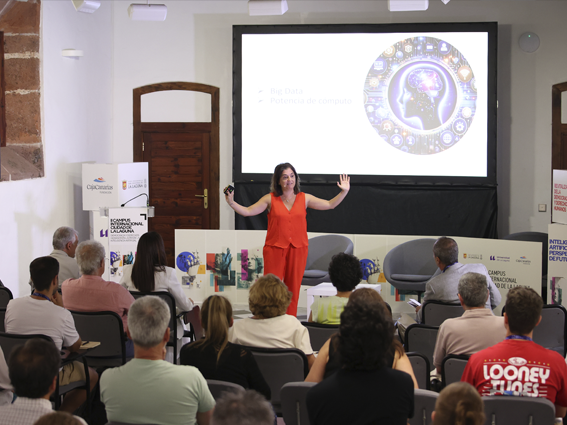
The second edition of the Ciudad de La Laguna International Campus has concluded, serving as an academic, cultural, and social meeting place that aims to bring knowledge closer to the public, foster reflection on the future, and encourage the generation of ideas on various current issues. This initiative stems from the close collaboration between the San Cristóbal de La Laguna City Council, the University of La Laguna, and the CajaCanarias Foundation.
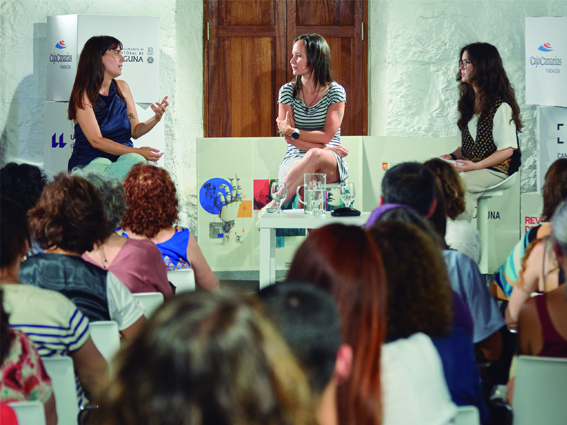
The Campus has been structured around three major thematic areas: the great challenges of democracy and human rights, heritage and artificial intelligence, which were addressed from an interdisciplinary, critical and global perspective, bringing together leading specialists of national and international prestige, such as Ana Palacio, Mohamed Joudat or Idoia Salazar.
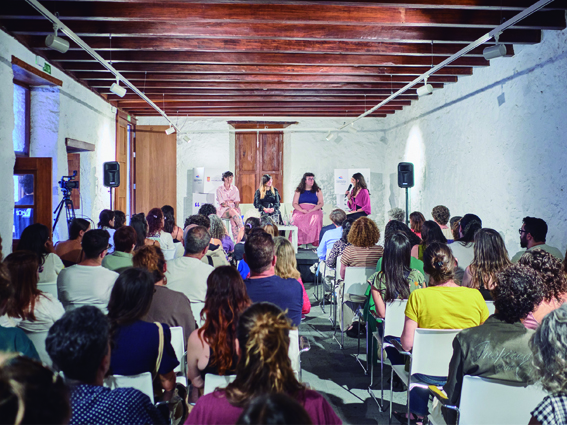
Since the start of its agenda on July 2nd, the cultural and academic program has been developed in various emblematic spaces of the city, such as the Convent of Santo Domingo, the plaza del Adelantado, the Paraninfo of La Laguna or the Teatro Leal.
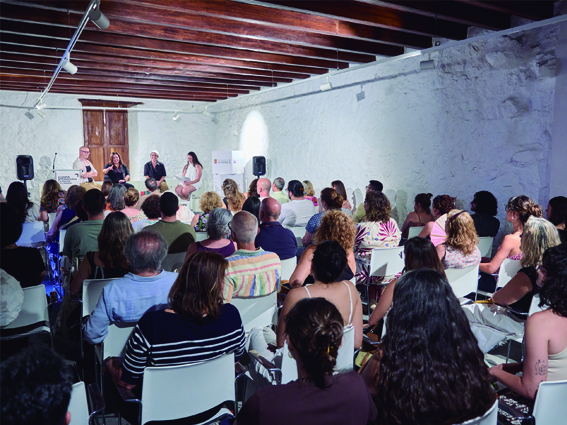
These venues have hosted presentations, conferences, round tables and exhibitions, offering attendees an environment of academic, scientific and cultural excellence.