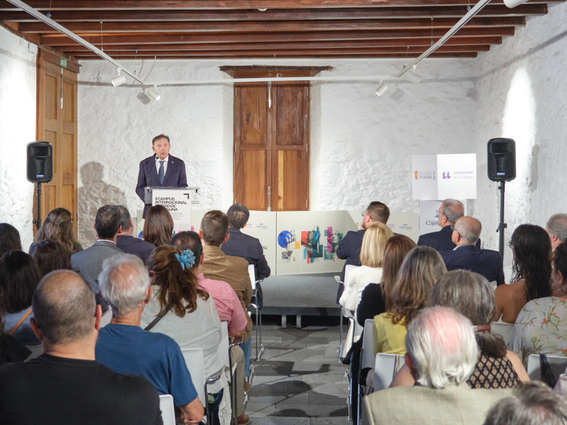


● The president of the National Court, Juan Manuel Fernández, and the president of the International Organization for the Protection of Cultural Heritage, Mohamed Joudat, will be among the key figures in the program.
● The training sessions, which will take place between July 27 and 30, are complemented by a parallel cultural program featuring exhibitions, literary talks, and a concert.
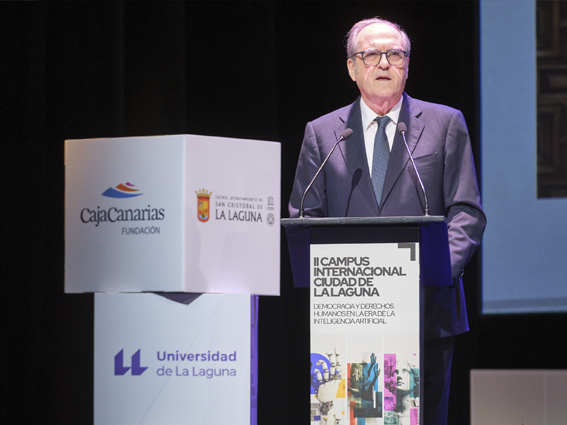
The San Cristóbal de La Laguna City Council, the University of La Laguna and the CajaCanarias Foundation today presented the second edition of the Ciudad de La Laguna International Campus, a meeting space that unites academic excellence with cultural dialogue with the aim of responding to major contemporary challenges, from artificial intelligence to the protection of heritage or the tensions faced by current democracies and the guarantee of human rights.
The initiative, promoted by the City Council of La Laguna, the University of La Laguna and the CajaCanarias Foundation, was created with the purpose of bringing knowledge closer to the citizens, promoting reflection on the future and encouraging the generation of ideas on different current topics.
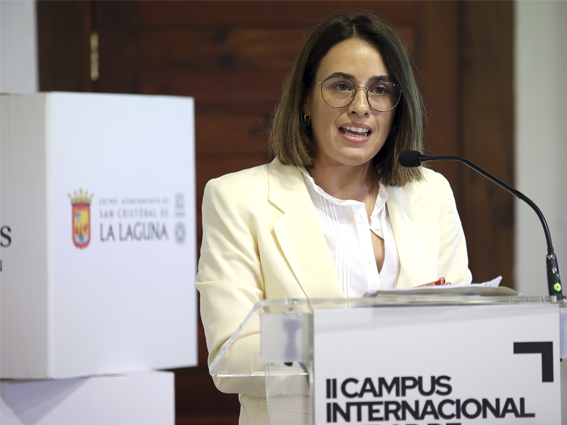
The presentation of the Campus took place today, Wednesday, June 24, following the signing of the agreement between the three entities, held in the Plenary Hall of the La Laguna City Hall. In attendance were the mayor, Luis Yeray Gutiérrez; the rector of the University of La Laguna, Francisco Javier García; and the president of the CajaCanarias Foundation, Humberto Orán, who outlined part of the academic and cultural program.
During the event, Mayor Luis Yeray Gutiérrez emphasized that “La Laguna will become an international meeting point for thought and culture, encompassing highly relevant current issues such as democracy, human rights, and artificial intelligence.” Gutiérrez also highlighted the course on cultural heritage protection, “which positions our city, once again, as a benchmark for reflection on the use and care of heritage and invites us to learn from leading experts who dedicate their lives to preserving this legacy worldwide.”.
Likewise, the Rector of the University of La Laguna, Francisco García, congratulated everyone involved in organizing the Campus, “thanks to whom we are celebrating its second edition today.” The ULL's highest representative also indicated that this year's focus and themes are “deeply relevant, at a time of global crisis, with active armed conflicts in many parts of the world, where democracy is being challenged.”.
For his part, the president of the CajaCanarias Foundation, Humberto Orán, emphasized that “both the presence of experts from major international institutions and the depth of the topics to be addressed in this academic experience will once again give the Campus significant social relevance.” He also highlighted the participation of the University of La Laguna (ULL) and the La Laguna City Council, “which make this initiative possible, allowing the city to once again demonstrate its openness to the world.”.
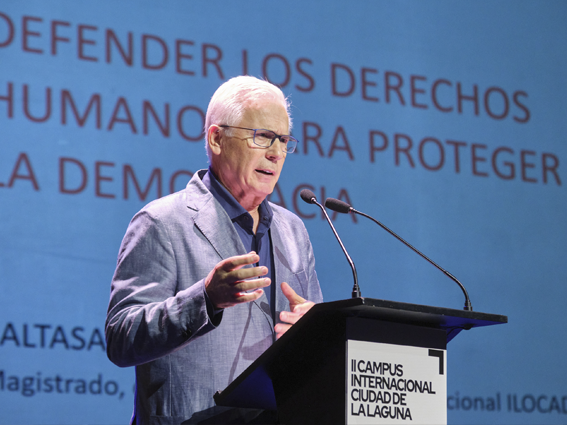
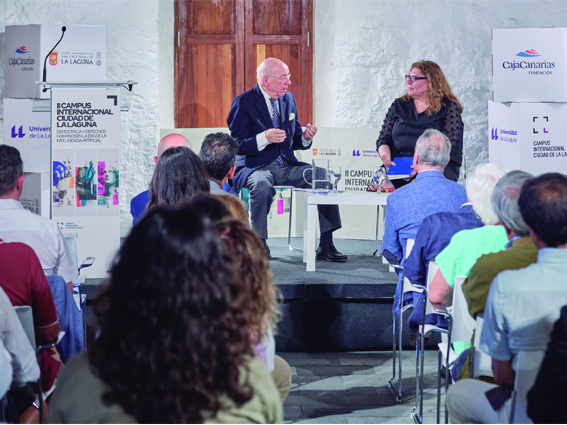
The Campus academic program will be held from July 27 to 30 and will feature the participation of national and international speakers, including the president of the National Court, Juan Manuel Fernández; the president of the International Organization for the Protection of Heritage and the International Center for Heritage Studies, Mohamed Joudat, and the president of the Observatory of Social and Ethical Impact of AI, Idoia Salazar.
The training program aims to attract and foster dialogue among professionals and students, as well as the general public, by introducing them to some of the major debates that will shape the future of society. The activities will take place in emblematic locations throughout the municipality with significant heritage value, such as the Santo Domingo Convent, the Teatro Leal , and the Anchieta House.
Academic activities
The training program is structured around three main courses that will bring together leading national and international experts. The first, focused on revitalizing democracy and human rights, will begin on July 27 with presentations by the President of the National Court, Juan Manuel Fernández Martínez, and former Minister of Foreign Affairs Ana Palacio. The following day, July 28, the United Nations Special Rapporteur on extreme poverty and human rights, Elena Carolina Díaz Galán, and the former Chair and current expert of the United Nations Committee on the Elimination of Discrimination against Women, Ana Peláez Narváez, will speak.
During this same day, a dialogue table will be held with the participation of the director of the UNESCO Chair of Human Rights and Democracy of the University of Las Palmas de Gran Canaria, Daniel Montesdeoca Rodríguez; the director of the Gregorio Peces-Barba Institute of Human Rights, María del Carmen Barranco Avilés; as well as the professor of Labor Law and Social Security of the University of La Laguna, Margarita Ramos Quintana, and the professor and doctor of Public International Law of the same institution, Ruth Martinón Quintero.
Casa Anchieta will host the second course, which will focus on the illicit trafficking of cultural property. On July 28, presentations will be given by Mohamed Joudat, President of the International Organization for the Protection of Cultural Property, and Joaquín Moscoso Novillo, international consultant on cultural legislation and former Director of the Institute of Cultural Heritage of Ecuador. The program will continue on July 29 with presentations by Jesús Prieto de Pedro, holder of the Andrés Bello Chair of Cultural Rights and expert for the Government of Spain at UNESCO for the Convention on the Promotion and Protection of the Diversity of Cultural Heritage, and Alesia Koush, holder of the UNESCO Chair on the Illicit Trafficking of Cultural Property at the University of Siena.
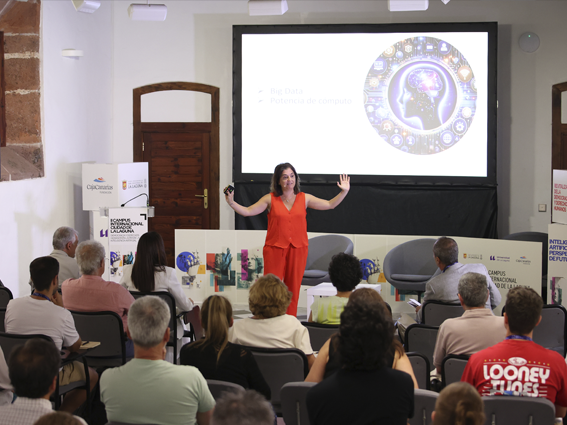
The future prospects of artificial intelligence will be explored on July 29 and 30. On the first day, July 29, speakers will include Óscar Cordón García, Professor of Computer Science and Artificial Intelligence at the University of Granada, and Idoia Salazar, President of the Observatory of Social and Ethical Impact of AI and Director of the International Chair on Generative AI at CEU San Pablo University and Deloitte. That same day, a round table discussion will be held with faculty members from the University of La Laguna, including Isabel Sánchez Berriel, Professor and PhD in Computer Science and Artificial Intelligence; Carlos Trujillo Cabrera, Professor of Civil Law; Carlos Martín Galán, Associate Professor of Computer and Systems Engineering and Manager of IT Services at the Institute of Astrophysics of the Canary Islands; and Juan Albino Méndez, Professor of Systems and Automation Engineering.
The course will close on July 30 with lectures by Moisés Barrio, Professor of Digital Law at the Carlos III University of Madrid and lawyer for the Council of State, and a representative of the Spanish Agency for Supervision of Artificial Intelligence (AESIA).
Exhibitions, literature and music
Alongside the academic debates, the Campus will offer an extensive cultural program throughout July. The public can enjoy several exhibitions, most notably the 'Gregorio Peces-Barba Legacy-Archive' exhibition at the CajaCanarias Cultural Center in La Laguna, which traces the career of the illustrious jurist in his defense of democratic values and will be open from July 9 to 30.
From July 2nd to 30th, Plaza del Adelantado will host '#SPIROU4RIGHTS', a project developed with the United Nations that visually explains the articles of the Universal Declaration of Human Rights through comics. During the same period, Casa Anchieta will also feature two important exhibitions. 'Constellation of Canarian Women Writers' will highlight the valuable historical contribution of women to the archipelago's literature, while another exhibition will commemorate the 1994 La Laguna Declaration, emphasizing that pioneering international call for the rights of future generations.
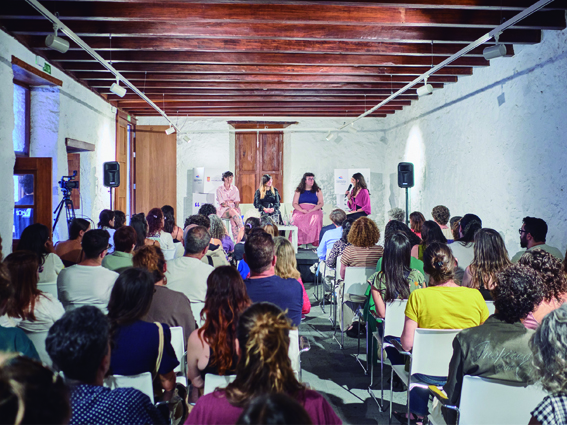
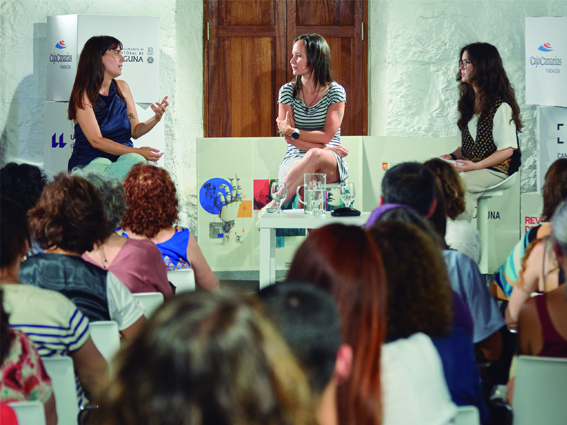
Casa Anchieta will host the Literary Encounters of Canary Islands Women Writers, conceived as a space for close dialogue about contemporary literature in the islands. The first session, dedicated to literary memory, will take place on July 7th, with the participation of Alicia Llarena, Daniela Martín Hidalgo, and Juli Mesa. The following week, on July 14th, Acerina Cruz and Lana Corujo will discuss the relationship between literary creation and the island territory. This series of discussions will conclude on July 21st with a focus on literature and diversity, weaving together the dissenting perspectives of Aida González Rossi, Alexis Erbez Díez, and Ainara Oleaga.
The grand finale to this intense program will be a musical performance on July 29th at the Teatro Leal. The concert 'Islands and Strings' will unite Benito Cabrera's timple with a string quartet from the Tenerife Symphony Orchestra, in a unique offering that fuses traditional Canarian roots with the emotion of European classical music.
Those interested in attending the Campus can register for free through the website www.campusinternacionalciudaddelalaguna.es. Places are limited for in-person sessions and unlimited for online sessions. Cultural activities are also free of charge.