News

The Third Literary Meeting of Women Writers vindicates the leading role of new female voices in Canarian literature

Aida González Rossi, Alexis Erbes Díez and Ainara Oleaga participate in a dialogue at Casa Anchieta about diversity, literary creation and the rise of emerging female authors in the archipelago

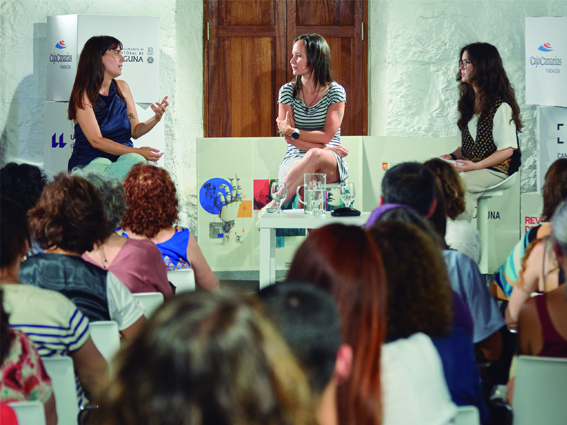
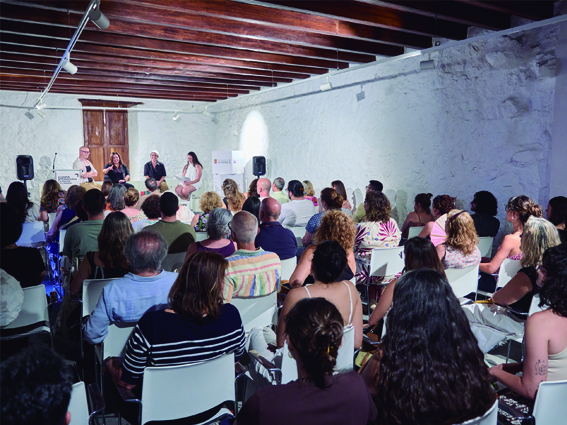
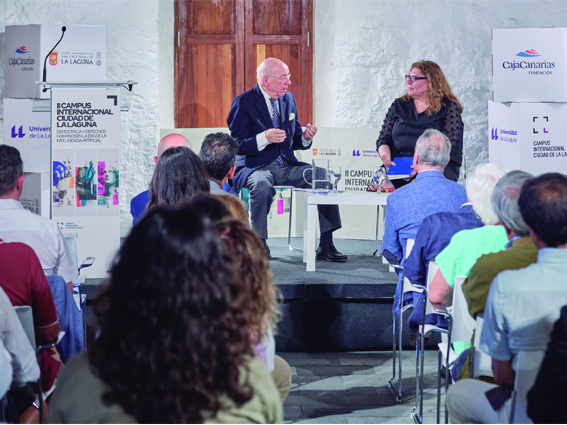
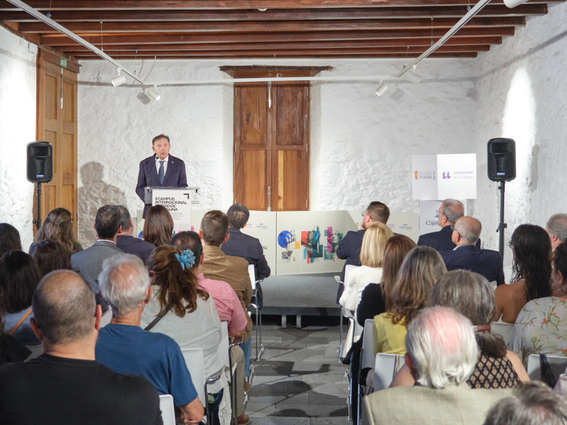
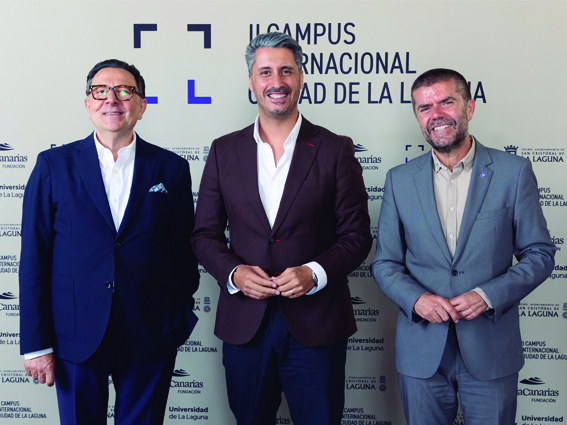
The Casa Anchieta hosted yesterday the celebration of the III Literary Meeting of Women Writers, an initiative framed within the II International Campus City of La Laguna that focused on the new Canarian literature with the aim of making visible the emerging talent of the archipelago and its contribution to the contemporary cultural scene.

Writers Aida González Rossi, Alexis Erbes Díez and Ainara Oleaga starred in a conversation moderated by philologist Celia Lorenzo, focusing on concepts such as difference, resistance and dissent, present in their respective works.

During the dialogue, the participants agreed on the importance of continuing to promote spaces that contribute to the visibility of literature created in the islands and encourage exchange between authors and readers.

Writer and journalist Aida González highlighted that “meetings like this demonstrate the importance of creating spaces where these emerging voices can dialogue with the public and with each other in order to give them the boost they need.”.

For her part, the writer Alexis Erbes Díez pointed out that "Canarian literature is going through a moment of great creative richness because there are more and more female authors who write from diverse perspectives.".

Ainara Oleaga, a teacher of therapeutic pedagogy, emphasized that "we have seen that there is a new generation that is expanding the map of our literature with solid, diverse and contemporary proposals.".

The III Literary Meeting of Women Writers brought the cycle of Literary Meetings of Women Writers of the Canary Islands to a close, which has had the collaboration of the Cultural Classroom of Language and Literature of the University of La Laguna and has been consolidated as a space for reflection, exchange and dissemination of female literary creation.

The celebration of the activity coincided with the exhibition 'Constellation of Canary Island Writers', which can be visited until July 30 at the Casa Anchieta and which proposes a journey through different generations of authors, highlighting the continuous expansion of the Canary Island literary map thanks to the emergence of new talents.
More news

Lana Corujo and Acerina Cruz claim territory as the origin of writing

In this new literary encounter, Lana Corujo and Acerina Cruz shared a space for dialogue and reflection on the relationship between literary creation, territory, and identity.

The 2nd International Campus City of La Laguna inaugurates a series of meetings with Canarian women writers that will address memory, territory and diversity

These literary gatherings of Canarian women writers are spaces for dialogue, reflection and exchange around three themes: memory, territory and diversity.

The 2nd International Campus City of La Laguna celebrates the democratic and humanist legacy of Gregorio Peces-Barba

This Thursday saw the opening of the exhibition 'Legacy-Archive Gregorio Peces-Barba. The voice of democracy and human rights', a show that recovers the intellectual and political trajectory of one of the decisive figures of democratic Spain.

The Ciudad de La Laguna International Campus inaugurates an exhibition on the 1994 Universal Declaration of Human Rights for Future Generations of La Laguna

This exhibition highlights the enduring relevance of this historical commitment to human dignity, coexistence, and responsibility towards future generations, and will be available until July 30th at Casa Anchieta in La Laguna.

The 2nd International Campus City of La Laguna will address the major challenges of democracy and human rights, heritage and artificial intelligence

The city of La Laguna hosts the second edition of the Ciudad de La Laguna International Campus, a forum for academic and civic reflection that will bring together prominent figures to address some of today's major challenges.

Our memory can change over time and be influenced by what we learn or how we interpret an experience

María Ángeles Alonso, PhD in Psychology from the University of La Laguna, reminds us in this interview that memory is not a perfect copy of the past, but a flexible tool that helps us learn from our experiences and orient ourselves in the future.

The role of international journalism is to continue exposing crimes against humanity

From the invisible front lines of information, Mayte Carrasco reminds us that telling the truth is an act of resistance today. Her humanist perspective champions memory, empathy, and ethical journalism as essential tools for refusing to normalize war or forget its victims.

Advances in nanotechnology and neuroscience have the potential to change not only our society, but also our personalities

Advances in neuroscience and neurotechnology can completely transform our social and personal models at all levels. Raquel Marín advocates for prevention and daily brain care as the key to healthy aging.

The 20th century was characterized by broad generalities in heritage, whereas now the focus is more on specifics.

Interview with Carmen Espegel, Professor of Architectural Projects at the ETSAM (Madrid School of Architecture), in which she advocates for a heritage understood from a particular perspective, where each layer of the past engages with the present to project the future. She defends its active reuse as the basis for identity, continuity, and transformation.