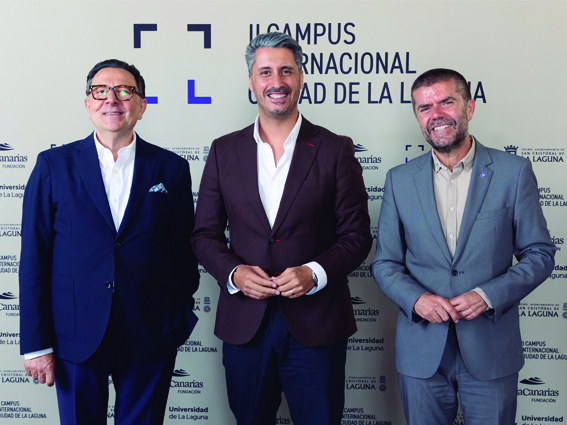


The event featured the UN Special Rapporteur on extreme poverty and human rights, Elena Díaz, and the President of the International Organization for the Protection of Heritage in Casablanca, Mohamed Joudat
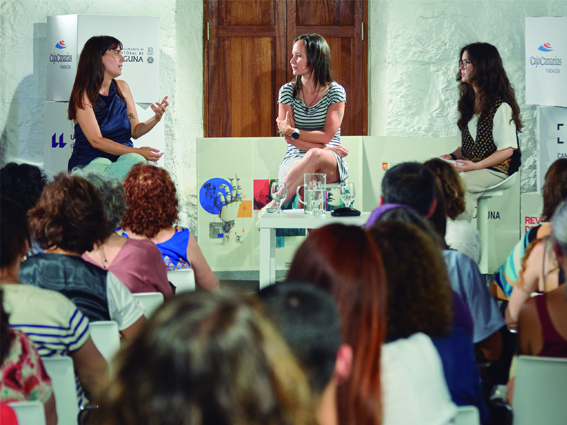
The Casa Anchieta hosted yesterday the celebration of the III Literary Meeting of Women Writers, an initiative framed within the II International Campus City of La Laguna that focused on the new Canarian literature with the aim of making visible the emerging talent of the archipelago and its contribution to the contemporary cultural scene.
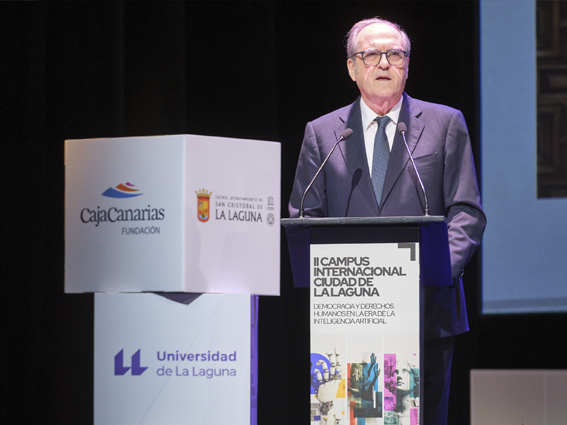
The 2nd International Campus of La Laguna held its second academic day this Tuesday with a program focused on contemporary challenges related to human rights, the fight against poverty, and the protection of cultural heritage and its role in the identity of peoples.
The Santo Domingo Convent and the Casa Anchieta hosted the conferences and roundtables included in the courses 'Revitalizing Democracy and Human Rights' and 'Combating the Illicit Trafficking of Cultural Property: Heritage and International Security,' respectively.
The day began at the Convent of Santo Domingo with a lecture by Elena Carolina Díaz Galán, United Nations Special Rapporteur on extreme poverty and human rights and Professor of Public International Law at Rey Juan Carlos University, who analyzed the eradication of poverty from a human rights perspective.
Díaz commented that “only 40% of the population lives in a democratic environment” and specified that “the fight against poverty cannot be undertaken without genuine political and social democracy.” In this regard, she defined this objective as the main foundation necessary to achieve the rest of the 2030 Agenda.
“Despite the progress made, we are at a difficult juncture where a law is still needed that imposes the obligation to eradicate poverty; for now, it is merely a political declaration, which is not legally binding and does not define any concrete obligations,” he added.
The role of United Nations treaty bodies
The program continued with a lecture by Ana Peláez Narváez, former president and current expert of the United Nations Committee on the Elimination of Discrimination against Women (CEDAW), who offered her vision on the evolution and future of human rights treaty bodies in this international organization and their role in defending fundamental rights.
“The Universal Declaration of Human Rights does not, in itself, create a monitoring mechanism or guarantees of its compliance. With the creation of treaty bodies, made up of independent experts, these precepts ceased to be an ethical or political aspiration and became legally binding obligations,” he explained.
Peláez also pointed out that the lack of resources causes a considerable delay in the system of control over states and expressed concern about those nations that, despite having ratified Human Rights, do not recognize the capacity of treaty bodies to carry out this supervisory work.
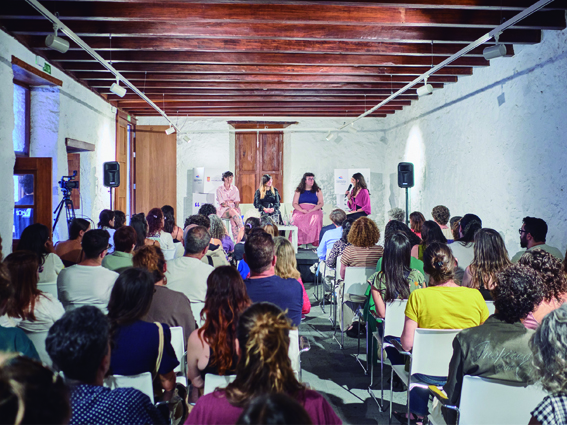
The academic program concluded with the panel discussion 'Revitalizing Democracy and Human Rights: A Debate,' moderated by Ruth Martinón Quintero, professor in the Department of Public International Law and International Relations at the University of La Laguna. Participants included Daniel Montesdeoca Rodríguez, director of the UNESCO Chair in Human Rights and Democracy at the University of Las Palmas de Gran Canaria; María del Carmen Barranco Avilés, director of the Gregorio Peces-Barba Institute of Human Rights at Carlos III University of Madrid; and Margarita Ramos Quintana, professor of Labor Law and Social Security at the University of La Laguna.
The participants reflected on some of the main challenges facing democracies, including rising inequalities, disinformation, political polarization, the representation of historically excluded groups, and the need to strengthen institutions as an effective guarantee of human rights.
Protecting heritage: a global challenge in the face of conflict
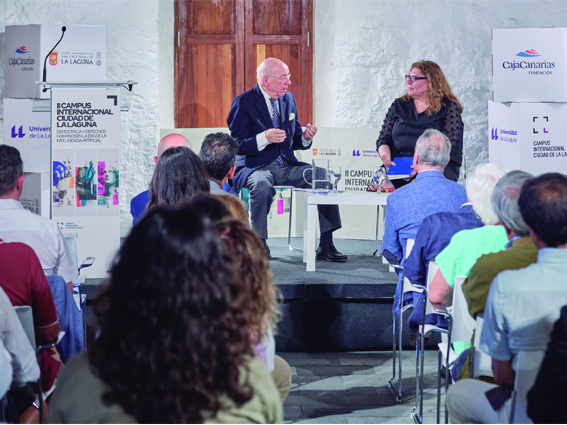
Meanwhile, at the Casa Anchieta, Mohamed Joudat, Professor of Letters and Human Sciences at Mohammed V University in Rabat and President of the International Organization for the Protection of Heritage in Casablanca, addressed the relationship between cultural heritage, human rights and international cooperation, highlighting the role of cultural assets as essential elements for preserving the collective memory and identity of peoples.
In his speech, Joudat asserted that the preservation of cultural property must be conceived as “a fundamental pillar of human security and the dignity of peoples,” transcending mere aesthetic or academic considerations, and emphasized that illicit trafficking and plundering “not only destroy the collective memory and identity of communities, but also constitute a direct violation of human rights and social cohesion.”.
She also made an urgent appeal to “consolidate a preventive and international framework for global governance.” Joudat advocated for progress toward restitution and historical reparations for African countries and local communities whose heritage has been plundered, granting citizens and regional actors “a leading role in the custody and safeguarding of their own cultural heritage.”.
The program continued with a lecture by the Director General of Casa África, José Segura Clavell, entitled 'The dignity of reparation for African countries' in which he reflected on the need to move towards new forms of international cooperation based on historical recognition, justice and the restitution of cultural heritage to strengthen relations between Europe and Africa.
Subsequently, Joaquín Moscoso Novillo, a Doctor of Jurisprudence, international consultant on cultural legislation, and former Undersecretary of Cultural Heritage of Ecuador, gave a lecture entitled "Institutional Framework and Public Policies for Cultural Heritage: The Latin American Experience in Combating the Illicit Trafficking of Cultural Property." Novillo presented experiences and strategies developed in Latin America to combat the illicit trafficking of cultural property and strengthen protection mechanisms.
The discussion on heritage protection continued with the round table 'Can the protection of cultural heritage be considered an essential element of human security in the 21st century?', in which Mohamed Joudat, Joaquín Moscoso Novillo; the emeritus professor of Administrative Law of the UNED, Jesús Prieto de Pedro, and the UNESCO professor of Illicit Trafficking of Cultural Goods and Rights of the University of Siena, Alesia Koush, participated; moderated by Ramiro Rosón Mesa.
The day concluded with a second panel discussion focused on heritage management models capable of reconciling conservation, social participation and sustainable development, an issue that once again brought together international specialists in heritage, law and cultural management.
National experts will address the ethical, legal, and technological challenges of AI
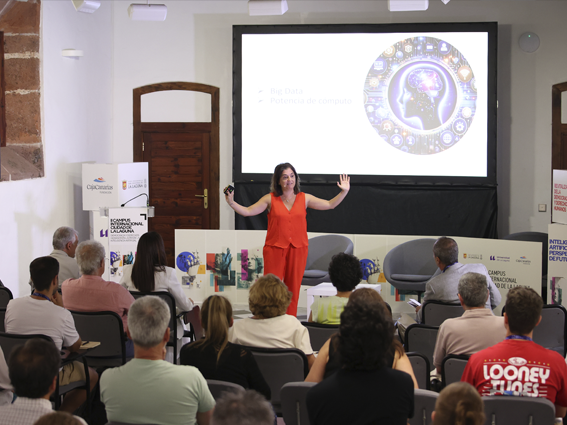
The program continues tomorrow with the courses 'Combating the Illicit Trafficking of Cultural Property: Heritage and International Security' and 'Artificial Intelligence: Future Perspectives'. Among the planned presentations are lectures by Óscar Cordón García, Professor of Computer Science and Artificial Intelligence at the University of Granada, on the conceptual foundations of artificial intelligence; Idoia Salazar, President of OdiseIA, on the ethics and regulation of intelligent algorithms; and Moisés Barrio Andrés, Professor of Digital Law at Carlos III University of Madrid, on the European and Spanish regulatory framework for artificial intelligence.
The sessions dedicated to the protection of cultural heritage and the fight against the illicit trafficking of cultural property will also continue, with the participation of leading national and international specialists.
The final touch to this program will be the concert 'Islands and Strings' which will unite the timple of Benito Cabrera with a string quartet from the Las Palmas Symphony Orchestra, in a unique proposal that fuses the traditional Canarian roots with the emotion of European classical music, on July 29 at 8:00 p.m. in the Teatro Leal.
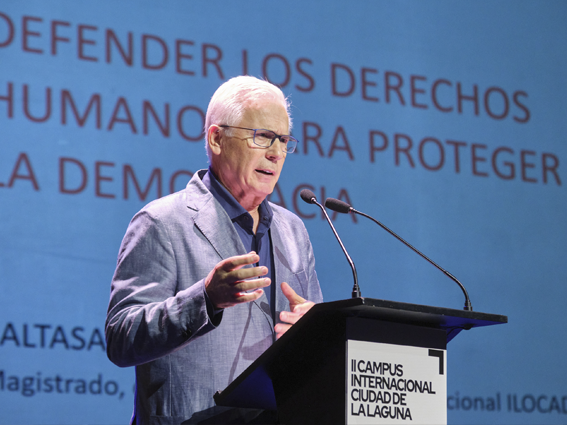
The 2nd International Campus in La Laguna will conclude on Thursday, July 30th, with the closing conference, which will take place from 12:30 to 1:30 pm at the Teatro Leal. Judge Baltasar Garzón Real, honorary president of the Baltasar Garzón International Foundation (FIBGAR), will deliver a presentation entitled "Defending Human Rights to Protect Democracy." His address will bring to a close a program focused on strengthening democratic institutions and effectively defending fundamental rights in the face of contemporary challenges.