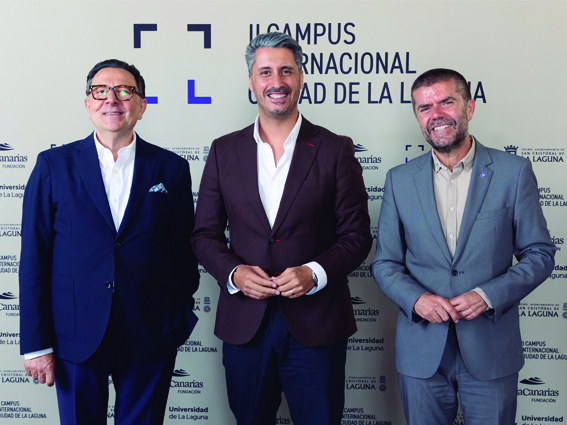


The ethics of artificial intelligence and the defense of cultural heritage are the focus of the debate on the third day of the II International Campus City of La Laguna
“Delegating intellectual tasks to AI will mean less and less training for our brains, making them more susceptible to manipulation.” This is how Idoia Salazar, president of the Observatory of Social and Ethical Impact of Artificial Intelligence (OdiseIA), defined what she considers the “greatest ethical risk of artificial intelligence” on the third day of the 2nd International Campus in La Laguna, held this morning. The program focused on the regulation of this new technological paradigm, the protection of fundamental rights, and the defense of cultural heritage.
The course dedicated to artificial intelligence began at the Convent of Santo Domingo with a lecture by Óscar Cordón, Professor of Computer Science and Artificial Intelligence at the University of Granada. Professor Cordón reviewed the evolution of this technology and its growing presence in strategic sectors such as the economy, industry, healthcare, and education. During his lecture, he emphasized the importance of developing increasingly understandable and responsible systems capable of generating public trust.
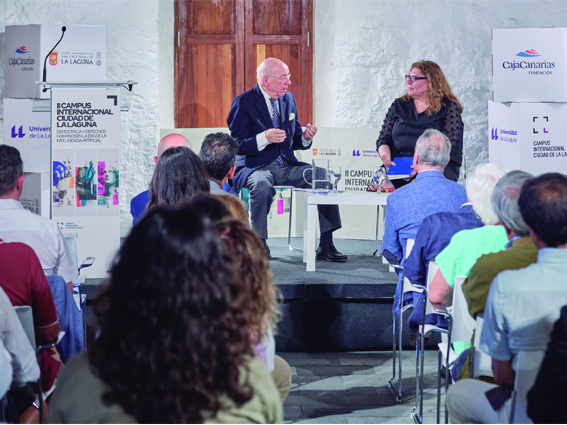
Next, Idoia Salazar, president of the Observatory of Social and Ethical Impact of Artificial Intelligence (OdiseIA), analyzed the ethical and regulatory challenges posed by the use of intelligent algorithms, paying special attention to the need to guarantee transparency, human supervision and the protection of fundamental rights in the development and implementation of these technologies.
Salazar warned that the greatest ethical risk of AI today is manipulation, as the permeability of intellectual capacity increases, just as happened during the Industrial Revolution when mechanical tasks were delegated to machines, leaving bodies less trained for certain tasks. “This manipulation directly affects our democracy,” he added.
The legal dimension of the phenomenon was subsequently addressed by Moisés Barrio Andrés, Professor of Digital Law at the Carlos III University of Madrid and lawyer for the Council of State, who examined the regulatory advances promoted by European and Spanish institutions to guarantee safe use compatible with democratic principles.
“The set of technologies grouped under the term AI, when misused, are more like nuclear energy than a knife,” he explained. He also commented that there was a very strong lobbying effort following the boom in generative AI in 2022. “In theory, these systems should be considered high-risk, which are the ones with the most regulatory obligations, but they managed to get a more easily compliant designation,” he elaborated.
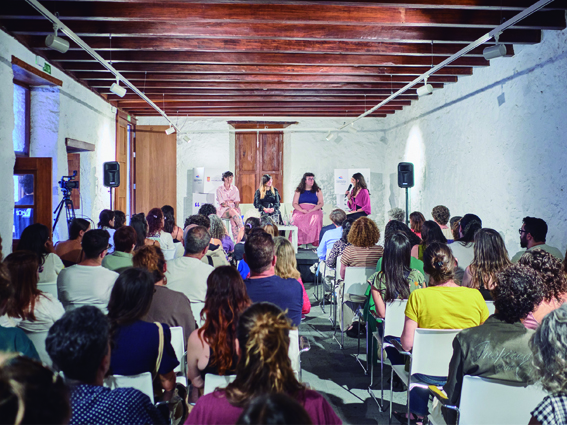
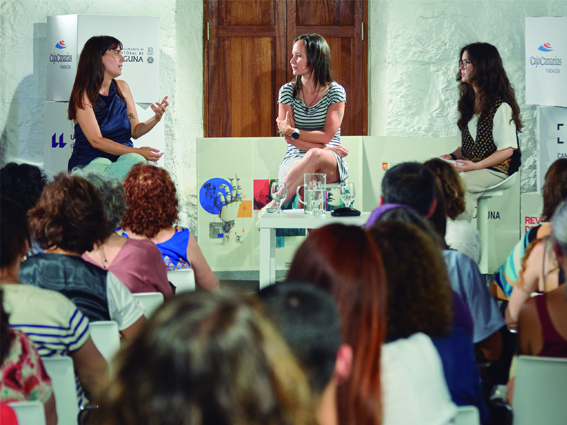
The program concluded with a panel discussion moderated by Juan Albino, Professor of Systems Engineering and Automation at the University of La Laguna, in which Isabel Sánchez, PhD in Computer Science from the University of La Laguna; Carlos Trujillo, PhD from the Department of Basic Legal Disciplines at the ULL; and Carlos Martín, Professor of Computer and Systems Engineering at the ULL, participated to reflect on the future prospects of AI and its influence on society, the economy, and democratic institutions.
Human rights, international cooperation and cultural heritage
Casa Anchieta hosted a new day of the course dedicated to the fight against the illicit trafficking of cultural property, with a program focused on strengthening the legal instruments and the human dimension of this phenomenon.
The activity began with a lecture by the emeritus professor of Administrative Law at UNED and holder of the Andrés Bello Chair of Cultural Rights, Jesús Prieto de Pedro, who analyzed the case of the wreck of Nuestra Señora de las Mercedes as "a benchmark in the protection of underwater heritage by demonstrating that legal creativity can be a decisive tool against plundering.".
“The recovery of the treasure was made possible by an innovative legal strategy based on the ship’s sovereign immunity, which set an international precedent and reinforced the idea that shipwrecks should be considered archaeological sites and places of memory, not simply commercial treasures,” said Prieto de Pedro
A round table discussion moderated by Ramiro Rosón Mesa then took place, in which Mohamed Joudat, Professor of Letters and Human Sciences at Mohammed V University in Rabat and President of the International Organization for the Protection of Heritage in Casablanca; Joaquín Moscoso Novillo, Doctor of Jurisprudence, international consultant on cultural legislation and former Undersecretary of Cultural Heritage of Ecuador; Jesús Prieto de Pedro, Professor Emeritus of Administrative Law at UNED; and Alesia Koush, holder of the UNESCO Chair on Illicit Trafficking of Cultural Property and Cultural Rights at the University of Siena, debated the role of law as a “preventive tool” against the plundering and illicit trafficking of cultural property, providing perspectives from Spain, Morocco, Ecuador, and Italy.
The program continued with a lecture by Alesia Koush, holder of the UNESCO Chair on Illicit Trafficking of Cultural Property and Cultural Rights at the University of Siena, who delved into the consequences of these practices for human rights and stressed "the importance of incorporating affected communities into the processes of heritage protection and recovery.".
The expert argued that the illicit trafficking of cultural property “should not be understood solely as an economic or patrimonial crime, but as a serious violation of human rights.” Koush explained that this plunder deprives communities of their identity, their memory, and their right to develop and enjoy their own culture. “The restitution of the artifacts alone is not enough, since during the time they remain outside their context, scientific information, educational value, and the cultural link with the communities of origin are lost,” she stated
The day concluded with a second roundtable discussion focused on the relationship between justice, human rights and cultural heritage, in which experts reflected on the limits of the current international legal framework and on the need to strengthen cooperation mechanisms and global governance to effectively combat the illicit trafficking of cultural property.
Baltasar Garzón will bring the II Campus to a close tomorrow
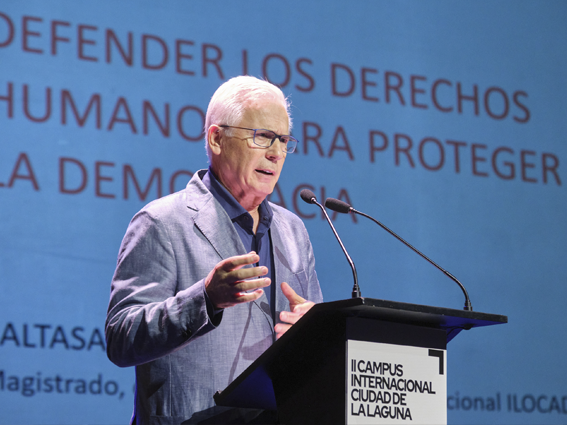
The 2nd International Campus in La Laguna will hold its closing ceremony tomorrow, Thursday, July 30th. The program will conclude with the lecture "Defending Human Rights to Protect Democracy," given by Judge Baltasar Garzón, Honorary President of the Baltasar Garzón International Foundation (FIBGAR), at the Teatro Leal in La Laguna. Following the lecture, attendees will have the opportunity to have Judge Garzón sign his latest book, "Democracy Under Threat.".
Likewise, the cultural program will end tonight with the concert 'Islands and Strings' which will unite the timple of Benito Cabrera with a string quartet from the Las Palmas Symphony Orchestra, in a unique proposal that fuses the traditional Canarian roots with the emotion of European classical music, at 8:00 p.m. in the Teatro Leal.
The II International Campus City of La Laguna arises from the close collaboration between the City Council of San Cristóbal de La Laguna, the University of La Laguna and the CajaCanarias Foundation, with the purpose of bringing knowledge closer to the citizens, promoting reflection on the future and encouraging the generation of ideas on different current topics.