

Casa Anchieta will host these events throughout July, which aim to connect different generations of female authors and reflect on the literature of the Canary Islands.
The events are in direct dialogue with the parallel exhibition "Constellation of Canary Island Women Writers," highlighting the continuous expansion of island literature.
The II International Campus City of La Laguna inaugurated yesterday the Literary Encounters of Canary Islands Women Writers, three spaces for dialogue, reflection and exchange around contemporary literary creation in the archipelago that will be held throughout the month of July, reaffirming the commitment to the dissemination of thought, culture and new female voices.
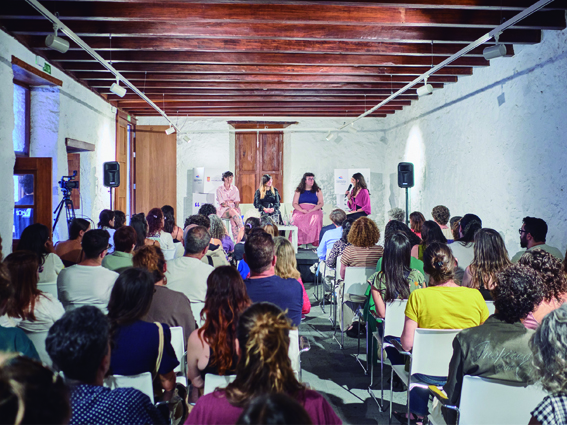
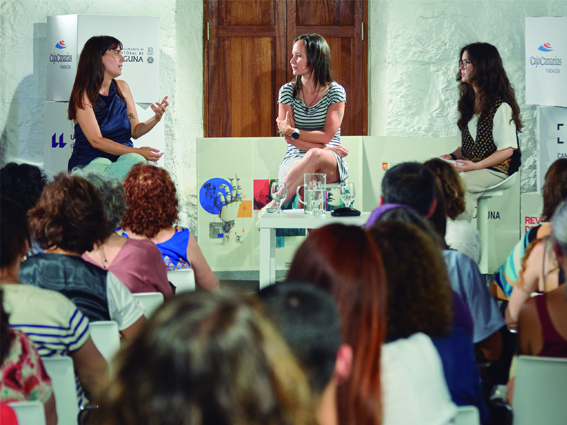
The series brings together the perspectives of new generations of writers and established authors. The opening session explored Canarian literary history from a historical and cultural perspective. Alicia Llarena, Daniela Martín Hidalgo, and Juli Mesa were the featured speakers at this event, which was moderated by Marta García Acevedo, a graduate in Spanish Language and Literature.
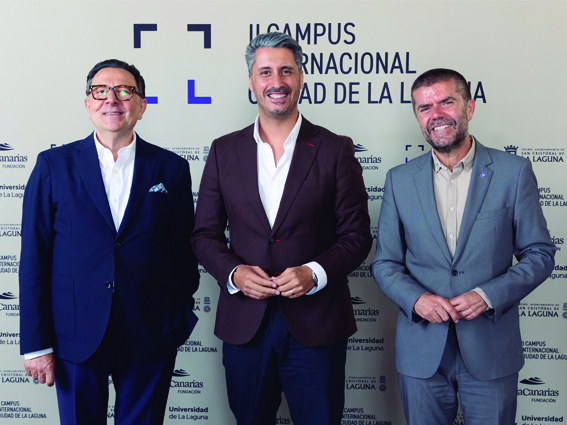
This opening day also included institutional representation from the Councillor for Territorial Planning, Housing and Cultural Heritage of La Laguna, Adolfo Cordobés; the Head of Training, Employment and Research of the CajaCanarias Foundation, Clara Gámez Marrero, and the Director of the Secretariat of Cultural Development of the Vice-Rectorate of Culture of the University of La Laguna, Isabel Castells Molina.
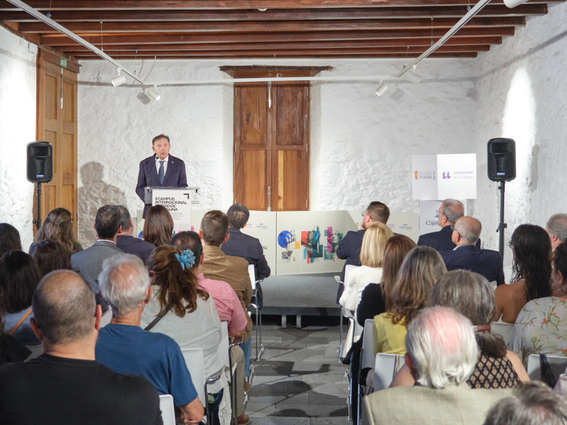
Adolfo Cordobés emphasized the importance of holding these meetings at Casa Anchieta. “That this building is today the setting for a literary dialogue between Canarian women writers reinforces the idea that heritage is not only what we inherit, but also what we continue to build through words, reflection, and creation,” he affirmed.
The councilman also explained that “La Laguna is a city that is built from its history, but also from the voices that narrate it, and in that sense, literature written by women provides an essential perspective to understand how our territory is transformed, how the city is experienced and how collective memory is transmitted.”.
Clara Gámez, Head of Training, Employment and Research at the CajaCanarias Foundation, highlighted that “with this meeting we intend to showcase the legacy and relevance of literature written by women in the Canary Islands” and recognize “the extraordinary moment that Canarian literature is experiencing and the essential role that its female writers play in the cultural renewal of the Canary Islands and the country as a whole.”.
In this regard, Gámez pointed out that “memory, territory, and diversity are some of the keys to understanding contemporary literature, and these themes will be present throughout this series.” She also emphasized that this series, together with the Ciudad de La Laguna International Campus, reflects “the shared commitment of various organizations to promoting culture, knowledge, and civic engagement.” Finally, she highlighted the CajaCanarias Foundation’s commitment to projects that promote knowledge, reflection, and civic engagement through culture.
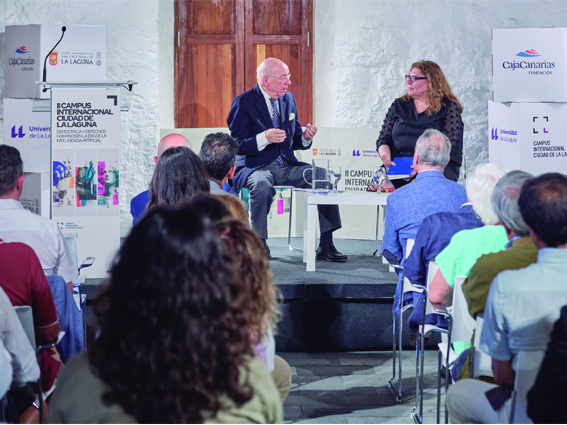
On the other hand, Isabel Castells, Director of the Secretariat for Cultural Development at the Vice-Rectorate for Culture of the University of La Laguna, highlighted the work of the ULL's Cultural Classroom for Language and Literature in organizing these meetings and its objective of connecting their themes with the core content of the academic program, because "literature and poetry have the capacity to address everything that concerns humankind." She also celebrated seeing "a room full of people who continue to gather to celebrate the power of words.".
Casa Anchieta will host the three sessions scheduled for 7:00 p.m. In this first session, Alicia Llarena explained that, for her, poetry is the emotional memory of human beings, the sediment in which all the knowledge of the human species is accumulated. “The events that history recounts to us, with facts, are complemented by the personal perspectives that poetry offers,” she added.
Daniela Martín Hidalgo, however, admitted that she began by basing her work on that subjective, personal, biographical memory, in a place where the search for that memory was broken, and explained that, over time, she has moved toward creating from collective memory. Likewise, Juli Mesa recalled that the processes of constructing and deconstructing language were what led her to become interested in literature because, as she explained, all those deconstructive processes speak to the memory and history of how a people is built.
The second event in this series will take place on Tuesday, July 14. In this session, authors Acerina Cruz and Lana Corujo will speak with philologist Beatriz Ortiz, exploring the relationship between literary creation and the island territory, positioning the Canarian landscape as a central element in these narratives. The series will conclude on Tuesday, July 21, with a discussion on literature and diversity. This dialogue will bring together the dissenting perspectives of writers Aida González Rossi, Alexis Erbez Díez, and Ainara Oleaga, moderated by philologist Celia Lorenzo.
In addition, the three scheduled events will feature the exhibition "Constellation of Canary Island Women Writers," currently on display at Casa Anchieta. This synergy aims to build an intergenerational bridge, highlighting the ongoing expansion of our literary landscape.
Attendance at all cultural activities is free of charge. Those interested can register and find more information on the website www.campusinternacionalciudaddelalaguna.es.