● Politician Josep Borrell, neuroscientist Rafael Yuste, and former UNESCO Assistant Director-General for Culture Francesco Bandarin are among the key figures at the event.
● The training initiative, which will take place between July 28 and 31, includes a parallel cultural program.
Within the framework of the commemoration of the Declaration of San Cristóbal de la Laguna as a World Heritage, the city hosts the first edition of the International Campus City of La Laguna, a forum of academic and citizen reflection that will bring together outstanding personalities of thought, science and politics to address key issues that cross the contemporary world.
The initiative, promoted by the CajaCanarias Foundation, the University of La Laguna and the La Laguna City Council, with the technical coordination of the Fyde CajaCanarias Foundation, was created with the purpose of bringing knowledge closer to the public, fostering reflection on the future and encouraging the generation of ideas on different current topics.
The signing of the framework agreement and the presentation of the campus were held today in the Aula Magna of the Central Building of the University of La Laguna, with the attendance of the mayor of La Laguna, Luis Yeray Gutiérrez; the rector of the University of La Laguna, Francisco Javier García, and the president of the CajaCanarias Foundation, Margarita Ramos.
During the event, Mayor Luis Yeray Gutiérrez stated that, thanks to initiatives like this, the city of La Laguna is consolidating its position as a cultural and academic leader on the island, and in the archipelago as a whole. “This first International Campus is another step in our commitment to establishing La Laguna as a meeting place for thought, knowledge, and reflection. Topics such as heritage, science, and peace are not only part of the program, but also integral to the identity and vocation of this city,” he affirmed.
Furthermore, the mayor emphasized the value of institutional collaboration, stating that “this Campus is the result of a strong alliance with the University of La Laguna and the CajaCanarias Foundation. Together we share the conviction that knowledge must have a real impact on citizens.”.
The Rector of the University of La Laguna, Francisco García, also highlighted “the academic excellence and high level of the campus program,” which will feature the participation of prominent international figures. “The opening ceremony will be led by Josep Borrell, High Representative of the European Union for Foreign Affairs, and the closing ceremony will be presided over by the renowned neuroscientist Rafael Yuste,” he noted.
For her part, the president of the CajaCanarias Foundation, Margarita Isabel Ramos, emphasized that initiatives like this represent a valuable opportunity to continue promoting the values that the foundation upholds. “This Campus is fully coordinated and aligned with these objectives, so it is a privilege to be part of a project that not only fosters critical thinking, but does so from such a significant location as San Cristóbal de La Laguna, a World Heritage City,” she stated.
The campus will be held from July 28 to 31 and will feature internationally renowned speakers, including Josep Borrell, current president of the Board of Trustees of the Barcelona Centre for International Affairs (CIDOB) and former High Representative of the European Union for Foreign Affairs; neuroscientist Rafael Yuste, professor at Columbia University and director of the NeuroRights Initiative, which promotes the inclusion of mental rights in international legal frameworks; and architect and former Assistant Director-General for Culture at UNESCO, Francesco Bandarin.
The training sessions will take place during the month of July in different spaces of the municipality, including the Convent of Santo Domingo, the Teatro Leal or the Paraninfo of the University of La Laguna, so that the dissemination of knowledge framed on the campus will be combined with emblematic locations of the city, favoring the participation of the university community and the general public.
Social interest program
Over four days, between July 28 and 31, the campus will integrate the different thematic blocks in an interspersed manner, which will be addressed by renowned professionals, who will act as trainers and speakers.
Among the issues to be addressed are the disasters of war and their humanitarian consequences, the challenges of preserving cultural heritage in a context of global transformation, as well as recent advances in neuroscience and their impact on the understanding of the mind and human rights.
The first day will begin on Monday, July 28, with the opening ceremony and the first lecture by Josep Borrell, former High Representative of the European Union for Foreign Affairs and Security Policy, entitled “The European Union Between Wars and Elections,” as part of the course on the disasters of war. The morning will continue with another presentation on the same topic, this time given by Colonel José Pardo de Santayana Gómez de Olea of the Spanish Army and professor at the Higher Center for National Defense Studies.
On Tuesday, July 29, two presentations on heritage and three on the disasters of war from a social and humanitarian perspective will be given by Ana del Paso Gallego, professor at the Complutense University of Madrid, and Carlos Batallas, a member of the Center for International Humanitarian Law of the Spanish Red Cross. A highlight will be a seminar with communication specialists, featuring journalist Mayte Carrasco; Luis Pérez, head of the International Department of TVE's news services; and war photojournalist Alberto Hugo Rojas. This seminar will be moderated and presented by Nicolás Castellano, a journalist from Cadena SER radio.
The relevance of heritage in the 21st century will be addressed by leading international experts on July 29th and will continue on July 30th with contributions and reflections from UNESCO's Assistant Director-General for Culture, Francesco Bandarin; Professor of History and Theory of Landscape Architecture from Geneva, Michael Jakob; Dr. Alejandro de Ávila Blomberg, an anthropologist from Mexico; and Professor of Architectural Projects at the Polytechnic University of Madrid, Carmen Espegel. The program includes a guided tour of emblematic houses and courtyards in La Laguna, reinforcing the link between theory and practice in a World Heritage city like La Laguna. A seminar will also be held with the President of the International Center for Heritage Conservation Foundation (CICOP), Francisco Aznar, and Professors Juan Manuel Palerm and José Luis Rivero.
Likewise, the Convent of Santo Domingo will host the course on neuroscience, neurotechnology and neurorights, which will be taught by the professor of King's College London, Katya Rubia; the director of the Neuroimaging group of the Cajal Institute of the CSIC, Guiomar Niso; and the professor of the Carlos III University of Madrid, Jesús Rafael Mercader.
On Thursday, July 31, the Teatro Leal will host a seminar on neurotechnology, which will feature the participation of the teachers from the University of La Laguna María Ángeles Alonso, Naira Delgado, as well as Professor Raquel Marín, under the moderation of the also professor of said university institution, Ernesto Pereda de Pablo.
As a final touch, a closing conference will be held that will delve into the implications of new neurotechnologies in science, medicine and society, led by the distinguished professor of Biological Sciences and director of the Center for Neurotechnology at Columbia University in New York, Rafael Yuste.
In parallel, from July 4 to 31, the Ciudad de La Laguna International Campus will offer a cultural program open to the general public, including a screening of the documentary Daughters of the Holy Land, followed by a discussion with its director, Marcel Mettelsiefen, and producer, Mayte Carrasco, moderated by Canarian filmmaker David Baute. The film offers an intimate and moving look at the Israeli-Palestinian conflict through the parallel stories of two young women whose lives have been profoundly marked by violence.
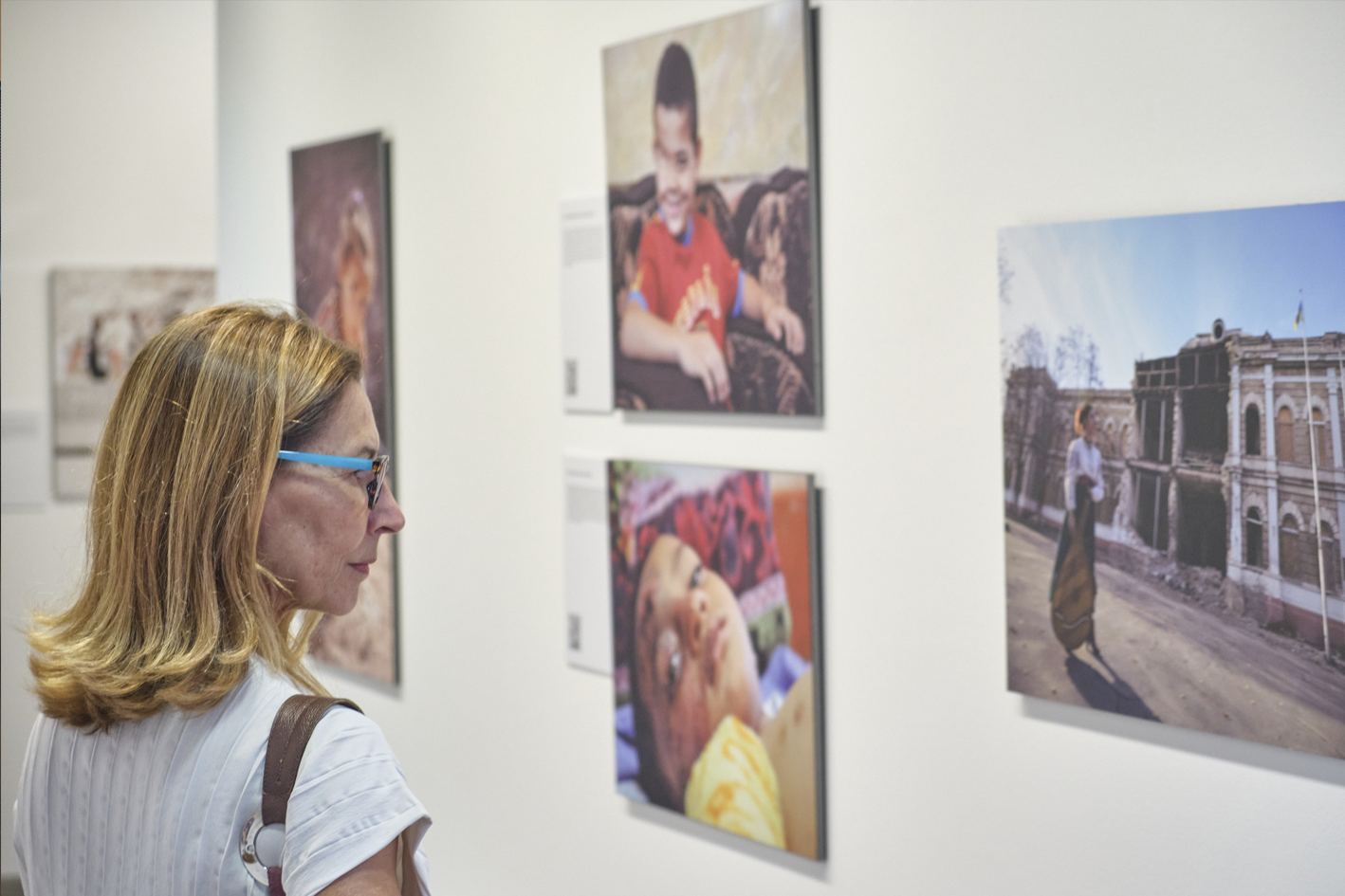
The cultural program is also complemented by exhibitions, talks and the commemorative concert for the 60th anniversary of Los Sabandeños, which will take place in the Teatro Leal, one of the most emblematic spaces in the city.
Those interested in attending the Campus can register for free through the website www.campusinternacionalciudaddelalaguna.es. Places are limited for in-person sessions and unlimited for online sessions. Cultural activities are also free, except for the Los Sabandeñosconcert, which has a single price of €5, with proceeds going to the NGO Paz En Construcción. Registration opens today, Wednesday.