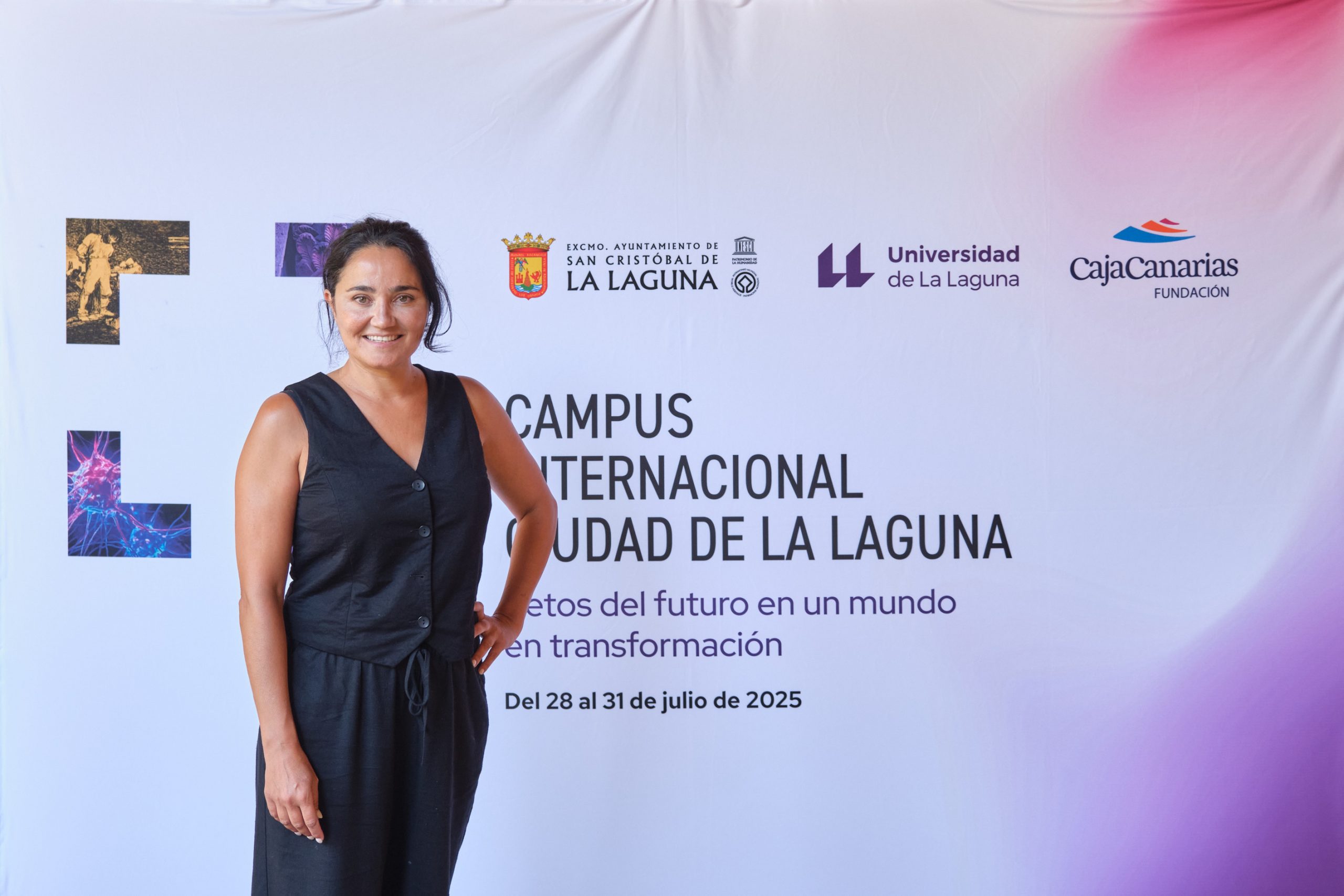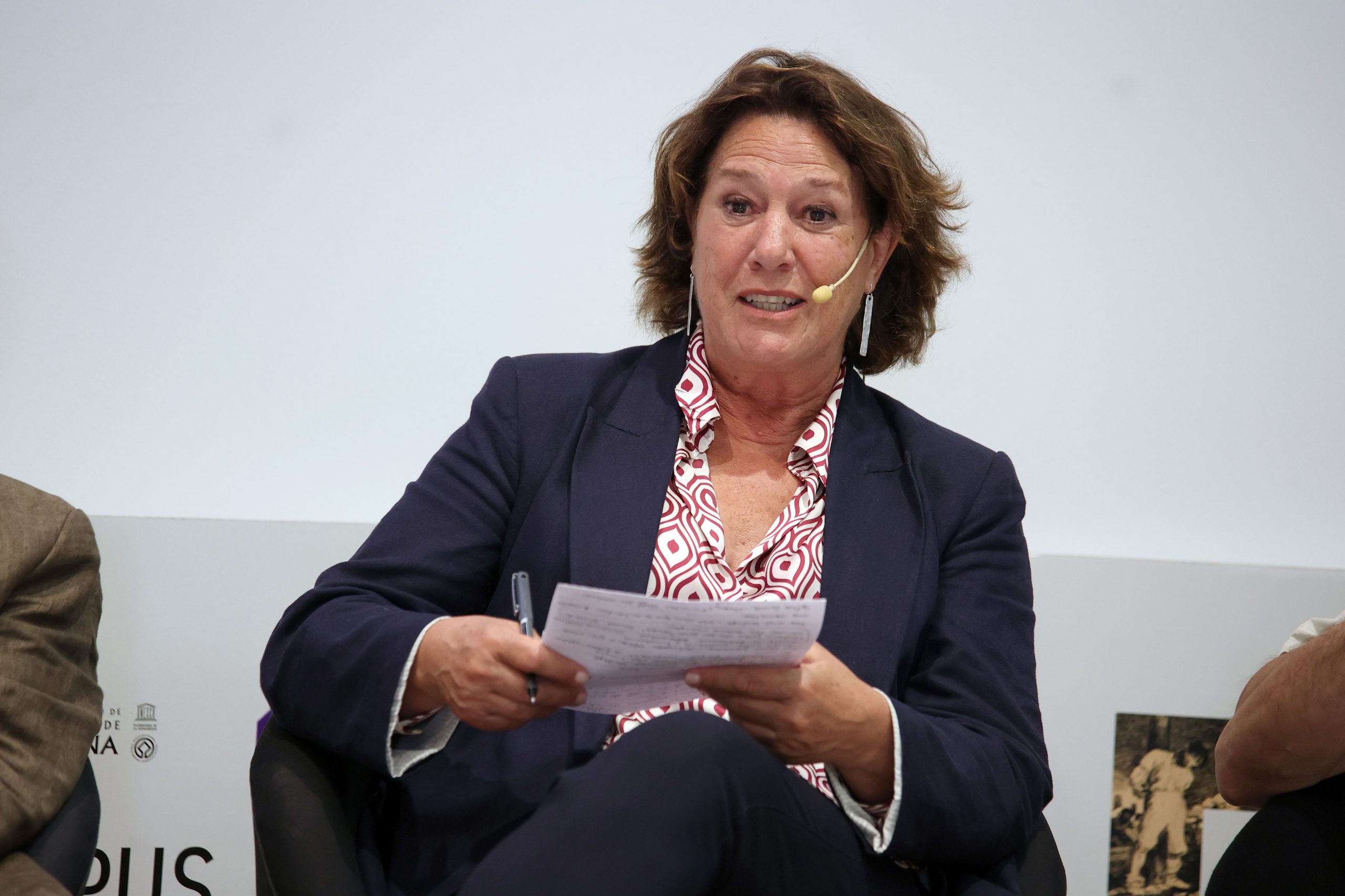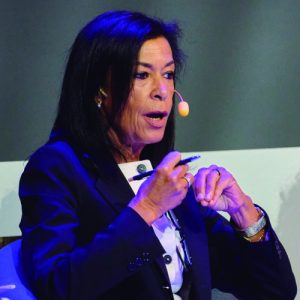
Interview with María Ángeles Alonso Rodríguez, participant in the Neuroscience for everyday life Seminar, within the framework of the course “Neuroscience, neurotechnology and neurorights: Humanity at the crossroads” during the first edition of the International Campus Ciudad de La Laguna.
María Ángeles Alonso Rodríguez holds a degree in Psychology from the University of Salamanca and a PhD from the University of La Laguna, where she currently teaches. Her research focuses primarily on the study of human memory, with a particular interest in cognitive distortions and the inhibitory mechanisms involved in information retrieval. Throughout her career, she has participated in numerous projects, conferences, and scientific publications, distinguished by the precision and rigor of her methodological approach.
In the first edition of the Ciudad de La Laguna International Campus, she participated in the Neuroscience for Everyday Life Seminar within the course 'Neuroscience, Neurotechnology, and Neurorights,' alongside various experts in the field. Her presentation addressed how neuroscience is reflected in daily life, considering aspects of cognition, emotion, and brain health. Among the topics covered, she highlighted the impact of social factors on brain function, as well as how we remember and the elements that influence our memories.
Based on the thematic focus of the Campus in which you participated, how do you think the new advances in neuroscience and neurotechnology are changing people's lives?
I believe that advances in neuroscience are changing our understanding of everyday processes such as remembering, learning, and decision-making. For a long time, memory was thought to function like a kind of recorder, storing the past exactly as it happened. However, today we know that the memory system is much more dynamic, and every time we recall something, we are actually reconstructing it . This means that our memory can change over time and be influenced by what we learn or how we interpret an experience.
Understanding this has implications in many areas, I believe, from education to mental health and even justice. New technologies are also allowing us to study the brain with greater precision, opening up many possibilities for better understanding memory disorders and developing new learning strategies. At the same time, these advances invite us to reflect on relevant social and ethical issues, such as mental privacy, which are important to discuss in open forums like the Ciudadela Laguna International Campus.
In the Neuroscience for Everyday Life Seminar, how did you connect your research on human memory with everyday processes of cognition and decision-making?
I tried to show that memory is present in everything we do. When we make coffee, decide which route to take to work, choose a restaurant, or trust people, we are using our past experiences to think about and imagine the future.
If we didn't have a past, we couldn't think about the future. I also explained that memory doesn't always reproduce exactly what happened. A very common example is when several people remember the same conversation or family gathering, and each one recounts different details. This doesn't necessarily mean that someone is lying. It simply means that each person reconstructs the memory from their own experience and by paying attention to different aspects. Understanding how this process works also helps us better understand why we make certain decisions and how our memories influence the decisions in our lives. The goal was to convey that the mechanisms I study in the lab are present in daily life and to bring scientific research closer to experiences we all recognize.
From your rigorous methodological perspective, what scientific precautions should be taken before applying neurotechnological advances to the social or legal spheres?
It is crucial to be very cautious, as neuroscience is advancing rapidly, but the brain and memory are highly complex systems.
Before applying neuroscientific knowledge in social or legal contexts, we need solid and well-confirmed evidence. Furthermore, we must avoid overly simplistic interpretations. For example, we know that memories can change over time or be influenced by subsequent information, which is highly relevant when interpreting testimonies or recollections of past events.
It is essential that scientists, legal professionals, and ethics experts work together to apply this knowledge responsibly.
Why is it important to understand that memory isn't always an exact reflection of reality?
We often trust our memories as if they were faithful reproductions of what happened and tend to equate recollection with truth, when in reality, remembering involves reconstructing.
When we recall something, what we're doing is reconstructing the past experience. And that process influences our emotions, our expectations, and our beliefs.
There are some very interesting experiments that demonstrate this. In some studies, people watch a video of a car accident and are then asked a question about what happened. Interestingly, changing just one word in the question—for example, saying "the cars bumped" or "the cars crashed"—can cause people to estimate different speeds and even recall details from the video that were never actually present.
These kinds of results remind us that memory is flexible and can be greatly influenced by context and by our expectations of who we are or what we can do.
What does it mean for memory to have an “adaptive value” in our daily lives?
Memory didn't evolve to record the past with photographic precision, but rather to help us adapt to our environment, make decisions, and, above all, survive in this complex world. For example, we remember experiences that were emotionally charged or that helped us learn something important in our lives. From an evolutionary perspective, this makes perfect sense.
Remembering potentially dangerous situations can help us avoid them in the future; even memory distortions can reflect this adaptive mechanism. Our brain tries to make sense of information, organize it, and relate it to what we already know. This allows us to learn from experience and anticipate future situations.
How can neuroscience help us improve our brain health on a daily basis?
Neuroscience shows us that the brain is plastic throughout life and responds to our habits. Factors such as quality sleep, exercise, maintaining social relationships, and learning new things are some of the factors that contribute to good brain health. Furthermore, we know that some learning strategies work better than others.
For example, many students study by rereading texts multiple times; however, research shows that it is much more effective to actively try to recall information, ask ourselves questions, or try to explain it without looking at our notes. This effort to retrieve information is what strengthens memory.
These are small changes that can have a very positive impact on how we learn and how we shape our brains.
In a context where neurotechnology is advancing rapidly, what risks do you see in relation to the possible manipulation or alteration of memory?
Memory is part of our identity and our personal history. In other words, we are who we are thanks to our memory, and any attempt to modify it raises important ethical questions.
We can imagine, for example, the possibility, as depicted in many films, of erasing or altering certain memories, which in some cases could even have therapeutic applications. But it also raises questions about the extent to which it is right to intervene in experiences that are part of who we are. It is risky to try to modify memories without fully understanding their adaptive functions or the long-term effects of these modifications on the individual.
From my perspective, it is essential to remember that memory is not an isolated file that can be edited without consequences, but rather part of an integrated cognitive system that provides continuity to the individual. That is why it is important that these advances be accompanied by robust ethical and regulatory frameworks to ensure that they are used responsibly.
After participating in the first edition of the Ciudad de La Laguna International Campus, how would you rate your experience overall?
Very positive and enriching, both academically and personally. I believe the Campus created a very interesting space for dialogue between science, culture, and society, facilitating the sharing of knowledge beyond specialized circles with the public, which is fundamental.
For those of us who conduct research, it is also a very valuable opportunity to explain our work in an accessible way and to listen to the public's questions and curiosities. These kinds of exchanges are always very stimulating because the public's questions often lead to new ways of thinking about research.
From your perspective as a researcher, why is it important for citizens to participate in these types of initiatives that combine knowledge, culture, and science?
Because science is part of culture and has social implications that affect us all. Understanding how memory works helps us better understand how we learn, why we forget certain things, or why we remember the same situation differently than other people.
When citizens participate in these kinds of initiatives, it fosters critical thinking and an interest in scientific knowledge.
Furthermore, I believe that dialogue between science and society also allows knowledge to flow in both directions. Science becomes more accessible and, at the same time, is enriched by the real questions and concerns of the population. It's a two-way street.
To conclude, if you had to summarize your main message to the audience after this talk, what idea would you like them to take away?
I would tell them that memory isn't designed to be a perfect copy of the past, but rather a flexible tool that helps us learn from our experiences and orient ourselves in the future.
Likewise, remembering and forgetting aren't system failures, but rather processes that work together so we can better adapt to the world. Understanding how memory works is not only fascinating from a scientific point of view, but it also allows us to appreciate how complex and adaptive it is.