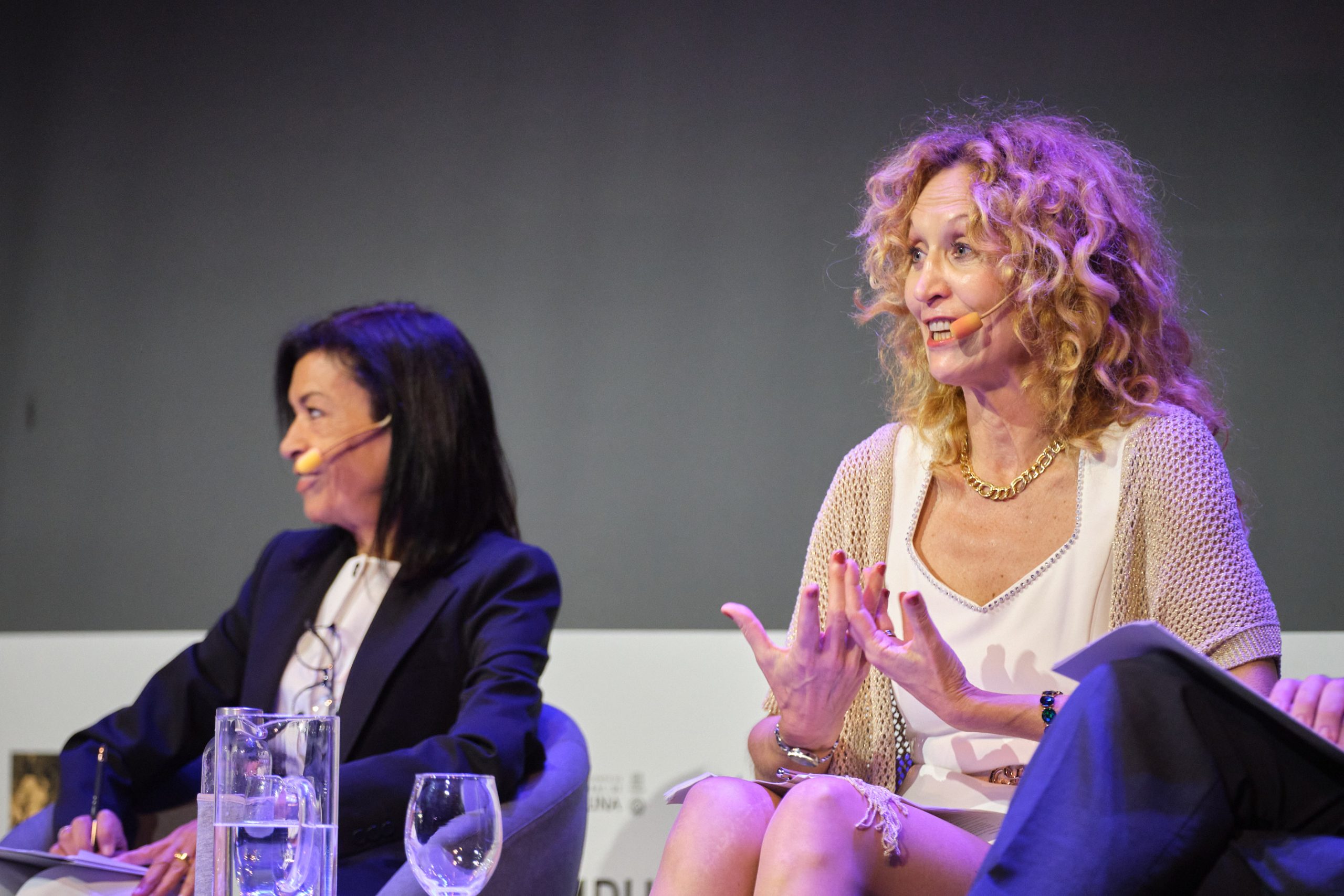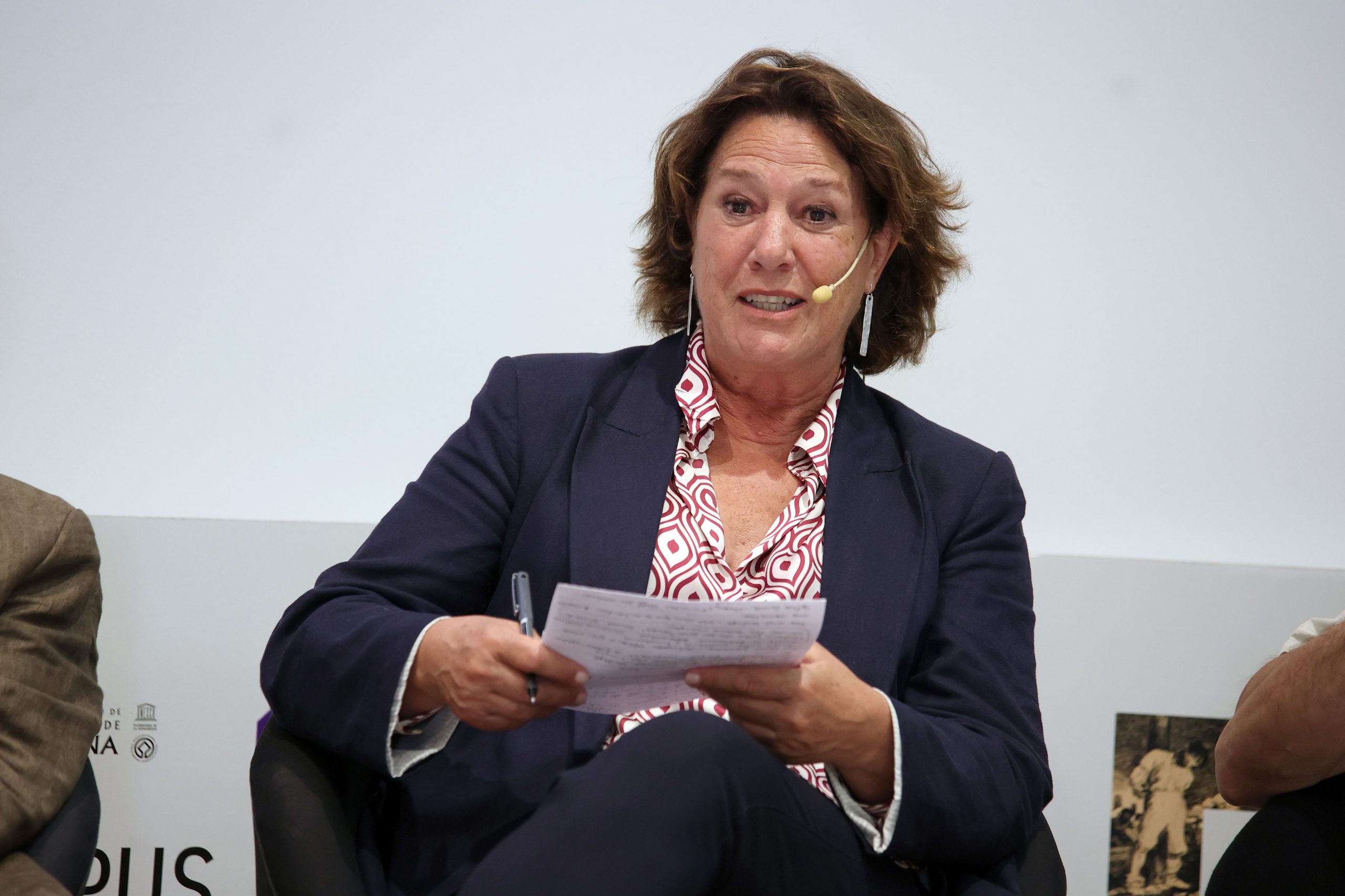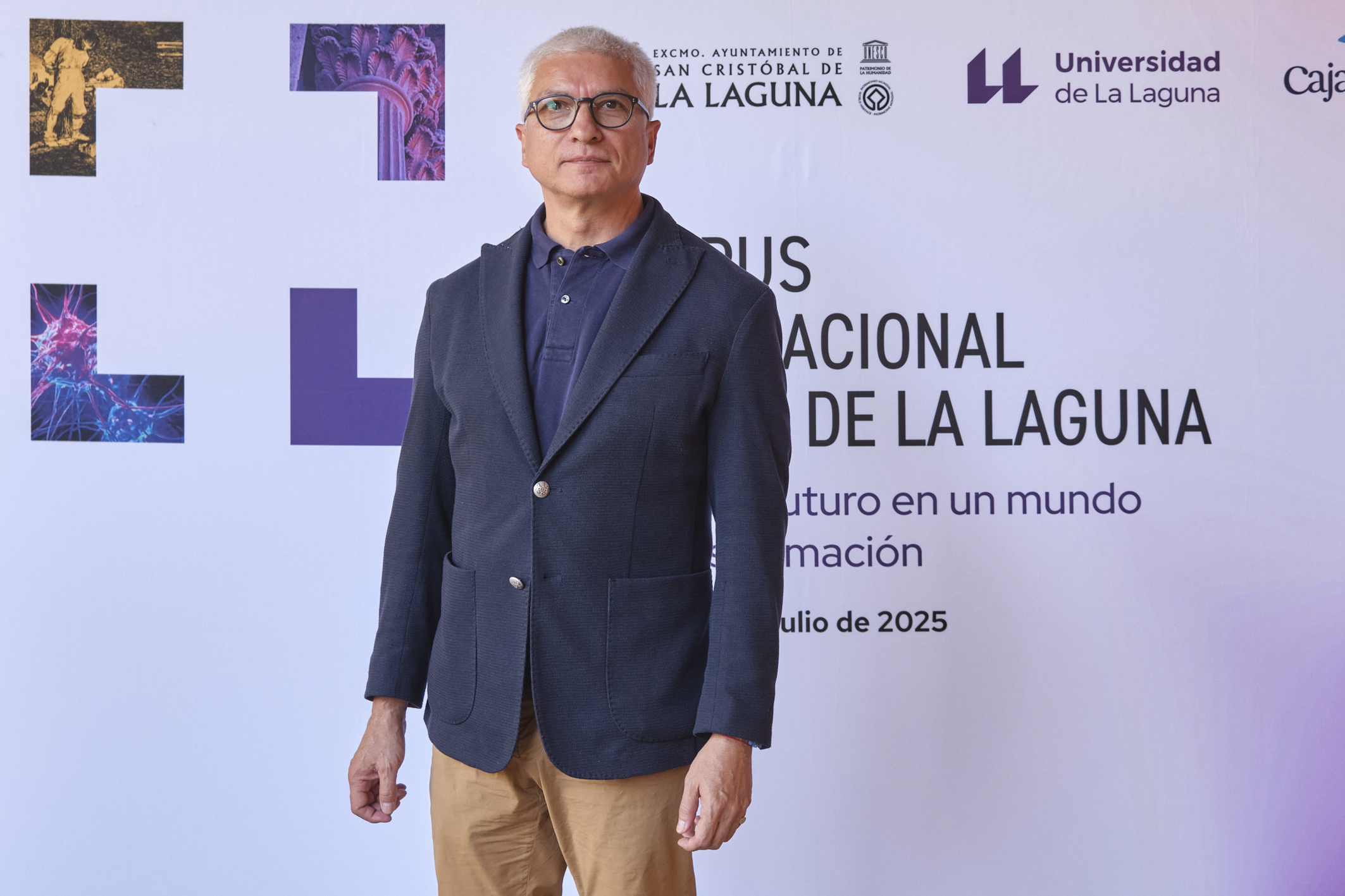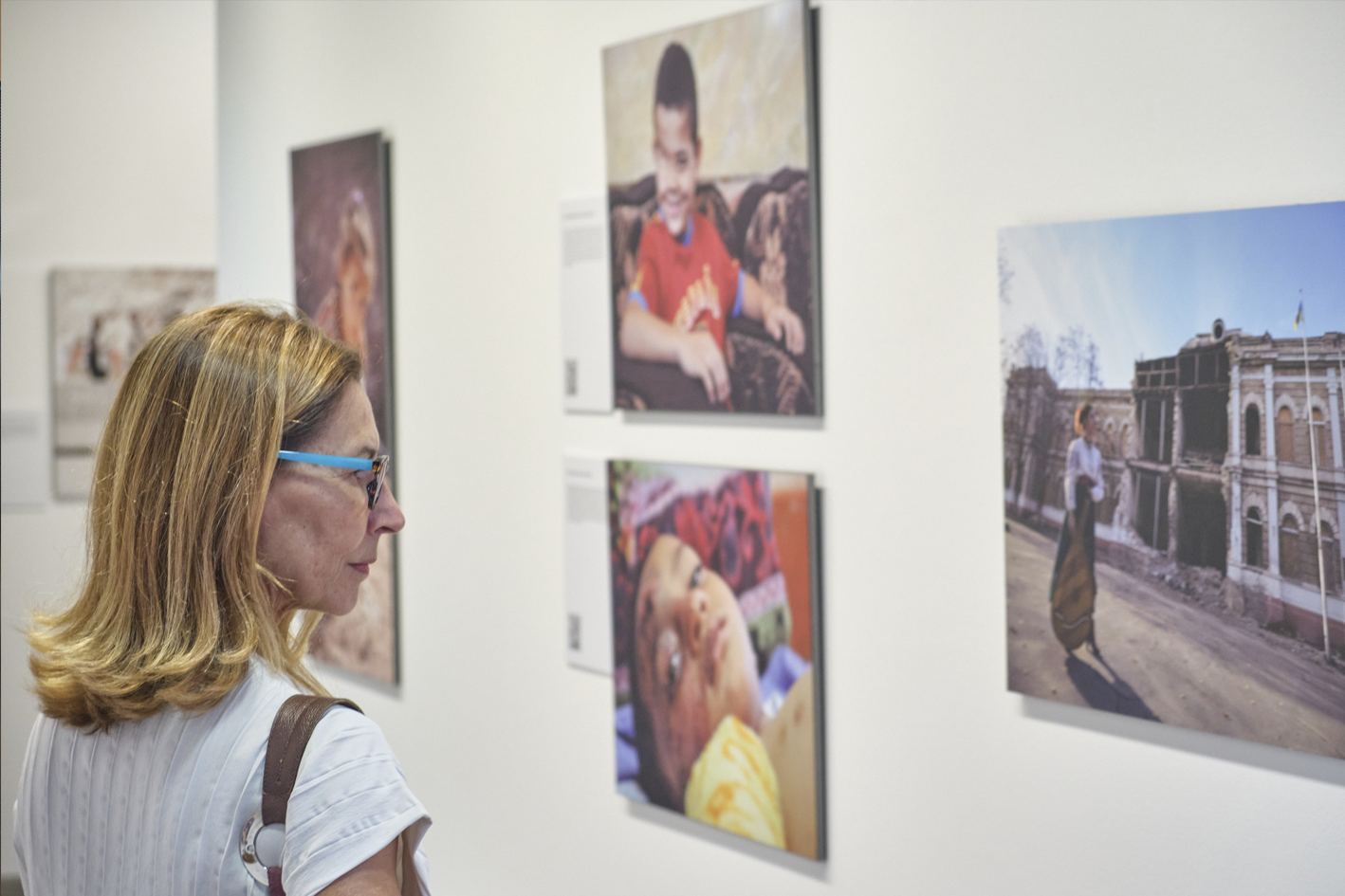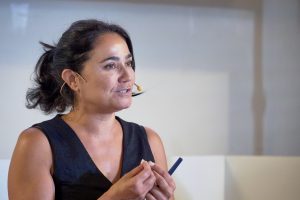
Interview with Mayte Carrasco, participant in the 'Dialogue Panel: Narratives of War', as part of the course 'The Disasters of War'. She also participated in the discussion following the screening of the documentary Daughters of the Holy Land, of which she is executive producer.
Mayte Carrasco is a multi-award-winning documentary director and producer, as well as a writer and war correspondent specializing in armed conflict and human rights. Throughout her career, she has worked in some of the world's most dangerous regions, including Georgia, Afghanistan, Mali, Syria, Iraq, Israel/Palestine, and various Latin American countries. Her firsthand experience has given her a direct and profound understanding of the real impact of war and peace processes.
At the first edition of the Ciudad de La Laguna International Campus, she participated alongside journalists and photojournalists Luis Pérez López, Alberto Hugo Rojas, and Nicolás Castellano in the panel discussion "Narratives of War." During her presentation, she shared her experience on the front lines of conflict, addressing the ethical, emotional, and political implications of war reporting. Also, as part of the cultural program, attendees enjoyed a screening of the documentary Daughters of the Holy Land , followed by a discussion with Carrasco herself, as the film's executive producer, and director Marcel Mettelsiefen. The session was moderated by Canarian documentary filmmaker David Baute.
Based on the thematic focus of the Campus in which you participated, what is your perspective on the nature and evolution of armed conflicts in the 21st century?
I believe that armed conflicts have evolved in ways we hadn't foreseen. We are immersed in a disruptive geopolitics that few anticipated, and in which figures like Trump have become a key element accelerating this change, the full extent of whose influence we still don't know. Unfortunately, current conflicts have devolved into hybrid warfare, where the battlefront is no longer the central focus. Today, the decisive factor is the struggle for information and control of the narrative.
That's why leaders like Putin, or any actor with interests at odds with Europe or the United States, have a vested interest in their version of events prevailing, in their values and narratives taking hold, whether from Russia, China, or Venezuela. And this struggle is waged primarily through social media. Information has thus become the center and epicenter of international conflicts: it carries as much weight when it is abundant and distorted as when it is lacking and silenced. A clear example is the conflict in the Congo, practically absent from the international media agenda.
As a director and producer of documentaries about war and human rights, what story have you found most difficult to tell and why?
Without a doubt, the story of the Baba Amr massacre. There, some four thousand people were murdered while trapped—though, in reality, there were many more—confined to barely three square kilometers of a neighborhood in Homs. Homs was then one of the main strongholds of the resistance against Bashar al-Assad in Syria. We managed to access the area with my cameraman at the time, Roberto Fraile, who was sadly murdered three years ago in Burkina Faso along with David Beriain.
We entered through tunnels, through the sewers, traveling kilometers underground to get there. Once inside, we saw the bombs falling methodically, almost automatically, six at a time. We counted between 100 and 200 bombings a day on that small area. At the hospital, trucks arrived overflowing with corpses. It was a terrible massacre: children, women, and entire families trapped, unable to escape through the tunnels while the neighborhood was completely surrounded by Bashar al-Assad's tanks, which fired without mercy.
For me, it was the most difficult experience of my career, not only because of the extreme danger, but also because of the frustration of seeing the civilian population suffer in that way. You wonder how it's possible that there's a human being on the other side of that cannon, of that tank, firing on defenseless civilians. And it wasn't just this episode that left a mark on me, but the war in Syria as a whole, a conflict that particularly interested me because, in many ways, it resembled the Spanish Civil War.
After covering so many different conflicts, what human learning experience has marked you the most and changed your way of seeing the world?
There are several. First, I suppose I've learned that life is short, that we are ephemeral, and that everything can change in a minute. But above all, what I've learned most is that we are all part of the same community: that one human being is no different from another, that a Muslim is no different from a Catholic, that a Syrian, Palestinian, or Congolese child is the same as an Afghan, Iranian, Spanish, or American child. They play the same games, they dream the same dreams, and in the end, we are all deeply connected.
I believe that if we helped each other more, as I've seen so many families do in the midst of conflicts, if there were a true sense of community and a positive intention to end wars, they wouldn't exist. And I've learned that this will comes from within human beings themselves, from each individual, but also from the community and, of course, from political will. Often, if not most of the time, wars are caused by politicians, not by the people. They make the decisions, often disregarding the will of the citizens, and that's a grave mistake, because it's the civilians who die, not the politicians, who almost always emerge unscathed… and enriched.
And, in your opinion… what responsibility do you think war journalists have today in building the collective memory of conflicts?
It's absolutely fundamental. I think we're at a point where we must persevere. Resilience is essential in journalism, and even more so in international journalism, because we're living through a crucial moment: memory fades.
Democratic and historical memory is vital. Many young nations are unfamiliar with dictatorships and autocracies, and they fail to understand that fundamental rights, won with so much suffering and bloodshed throughout the 20th century and earlier, cannot be taken for granted. We must continue to fight for them, and among these are freedom of expression and freedom of the press. These freedoms allow for a just memory, for the truth about what happened in history and what is happening now to be shared. Defending that truth is not easy, especially amidst the torrent of disinformation and deliberate noise that characterizes today's hybrid warfare, which seeks to undermine the values that sustained the West throughout the 20th century.
The role of international journalism is to continue exposing crimes against humanity. To continue seeking the truth, however difficult it may be. Journalism must take a stand, but not by aligning itself with the left or the right; that would be a grave mistake. It must stand with truth, ethics, and morality, so as not to spread lies or favor one ideology, government, or power over another.
What we need now is independent journalism, committed to the people, that provides information and preserves memory. Journalism that remembers, that makes what is important visible, that practices self-criticism, but that also recognizes the importance of its work. And in this, the primary protagonists are the international reporters, who bring the truth to every corner of the world.
How does it emotionally affect correspondents to continuously report on the suffering of others, and how can that impact be managed? At a care level.
The truth is, you learn to manage it relatively well, especially compared to how victims or refugees deal with their problems. I've been in ten conflicts, but always as a spectator. I'm lucky enough to be able to go back. When you return, you already feel so fortunate that you practically don't need therapy; you just have to look around and realize how lucky you are. That, in itself, is healing.
I know many war reporters who, after covering the Arab Spring, suffered enormous post-traumatic stress. Not only because of the ongoing violence we witnessed, but also because they were consecutive wars: first Tunisia, then Egypt, Syria, Iraq, and later, the war against jihadism in Mali.
In my case, during this last conflict, there was a moment when I "lost my fear." I found myself walking through an ambush without feeling afraid, because I had been through much worse: they were shooting from all sides and I wasn't even hiding from the bullets. Then I understood that fear is necessary and that I had to reclaim it. People often say that we're addicted to adrenaline, but that's not it; in the end, what happens is that you stop feeling fear. And that's the real problem.
When you become numb, when everything is the same to you as a mechanism of the brain to protect itself from pain, dissociation, that is the moment when a war journalist must stop.
Sometimes you feel very frustrated, wondering if all the effort is really worth it. But you have to keep going, because every little bit helps, and together they make up the whole beach. With that small contribution, we help change the world, even though there are forces that want to stop it. The important thing is to learn to let go and leave that frustration behind.
Regarding the screening during the Campus of the documentary 'Daughters of the Holy Land', of which you are executive producer, I ask you: what ethical challenges arose when filming the daily lives of people living in a constant context of violence and fear?
They were mainly production crews, because filming in the Jenin camp was quite dangerous. Everything related to filming within the Palestinian territory was the most complicated. Daughters of the Holy Land is a particularly tough documentary, and one of the biggest challenges was gaining the trust of the people being filmed—a task that requires time, patience, and respect—in order to record their lives naturally, entering their homes and telling their stories in their own voices.
The biggest challenge was ensuring that, in the end, the protagonists' perspectives and experiences were faithfully reflected in the final edit, and that the participants felt comfortable with what was ultimately shown.
After watching the documentary, what do you think documentary film can contribute to the understanding of armed conflicts, in this case one as complex as that of Palestine and Israel?
If we seek reality and truth, and want to approach what is happening in the world in a sincere way, I believe that documentaries are the format that best fulfills that intention today. That's why I consider it invaluable that people are interested in them, that they go to the cinemas or seek these works out on streaming platforms. It's important that new generations, especially, watch documentaries about the biographies of leaders or about history, such as those about World War II and Nazism, to understand what is happening today. Only by looking to the past can we understand history.
The past guides us amidst the current chaos, because the future is uncertain. For example, our series Afghanistan: Wounded Land , with four 52-minute episodes, allows us to explain the history of Afghanistan and understand the country we see today. I am very proud to be able, through this series, to help people understand what happened in order to comprehend the current reality.
Undoubtedly, documentary film offers a direct and intimate way to experience stories. For documentary filmmakers, it's a way to approach reality in a different way. And I believe it will continue to be so in the future, because it retains that sense of reality—that is, the closest we can get today to understanding conflicts and the lives of the people who live through them.
After participating in the first edition of the Ciudad de La Laguna International Campus, how would you rate your experience overall?
It was truly a wonderful experience. I think I've rarely felt so comfortable in any other place. What's more, the cinema was packed, and it's always a pleasure to see people come and enjoy your work, especially in the summer. I sincerely thank the audience for their interest in such a complex, sad, and painful issue as what's happening in Israel and Palestine. For being part of the awareness we must maintain today, of resistance for our values, which include understanding others and having empathy.
I also want to thank the Campus organizers, because they made us feel very welcome. Everything was very pleasant and very well organized. It was very enriching to be able to share our knowledge and exchange ideas with all the participants.
And to conclude, what is your perspective on the short and long-term evolution of conflicts in the 21st century?
Everyone is asking if there will be a conflict soon. I believe we are already in the midst of a global conflict, albeit a hybrid one, largely invisible to the naked eye.
These are what are called fourth-generation wars: conflicts that are partially hidden, mainly from the eyes of intelligence agencies, and that are part of a new world order. Behind this scenario are two very clear factors: climate change and the looming refugee and food crisis. The energy transition, in this context, is generating a dangerous struggle for the planet's resources, and this will shape future conflicts.
We are witnessing a return to nation-states and a degree of militarization of energy, as well as the progressive nationalization of strategic companies. We are living through what could be considered pre-war times, in which everything is being reorganized around competition for resources.
As I said, the energy transition is shaking up international relations. China, for example, aspires to be a global leader by 2050 and is moving rapidly, controlling many of the resources that will be essential for future technologies, such as electric cars.
Undoubtedly, the leaders of the future will be those who control energy resources. And that's a step that has already been taken, putting Europeans and Americans ahead of us until proven otherwise.